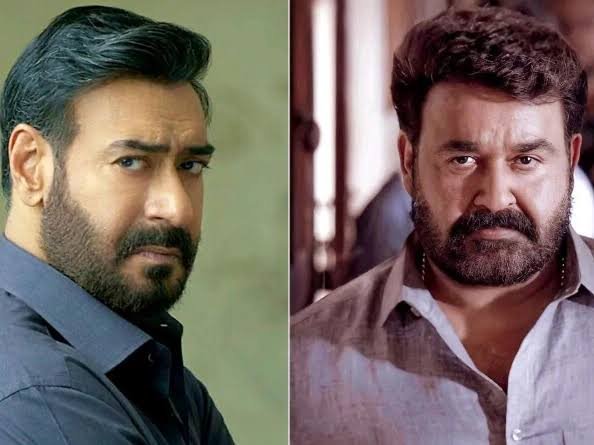
The Drishyam film franchise has emerged as one of the most successful instances of a Malayalam story making its way to Hindi cinema. And with talks of Drishyam 3 being launched into the rumour mill, one might also wonder about the legal rights required when remaking a film in a different language for a separate audience.
The first Drishyam film was made in Malayalam with Mohanlal in the lead role. Due to the popularity of the film, there was an official remake in multiple languages of the Indian film industry; most famously, in the Hindi language (starring Ajay Devgn). Adaptations are not just authorized by the remaking filmmakers through agreement to use the original film’s title and re-create the core plot.
Copyright Protection for the Original Film
A cinematograph film is considered a copyrighted work within the meaning of the Copyright Act, 1957. The Copyright Act may offer protection to copyright in the film or any other work which exists along with the film from the time of its creation, such as literary or musical works.
The key is that there is a difference between the idea and how that idea is expressed. An idea, or general concept, may not be eligible for copyright protection, just as its particular expression cannot be. But copying all or a substantial part of an original screenplay, story, or the like, can cause copyright infringement.
For this reason, it will usually be necessary to obtain appropriate rights from the persons or entities that control the relevant copyright interests in order to produce a remake of an existing film.
How Remake Rights Work
Typically, a remake will be made on the basis of rights acquired under a contract with the copyright owner or other authorised rights holder. The contract can provide for the language, territory, term, medium and other terms in which the remake will be made.
In case of the original work is a Malayalam film to be remade in Hindi, the producer of the Hindi version would have to have the requisite rights of the original work. The agreement may further cover sequel rights, distribution rights, dubbing rights, TV rights, digital rights, and other exploitation rights.
This is especially crucial when a franchise spans more than one film. Rights for an early adaptation aren’t necessarily rights for anything that comes afterward, so that franchise rights for an unrelated future sequel or adaptation can’t be assumed to be automatic.
When a Remake Turns Into a Franchise
It can also get tricky if the remake itself acquires a chance and is a hit and receives a franchise. The Hindi Drishyam films are based on the original Malayalam film but the rights in each subsequent film may vary according to the agreements and intellectual property rights in each film.
The sequel may incorporate entirely new creative content that is independently protected. On the other hand, if the sequel incorporates characters, situations or other protected elements derived from the earlier work, there is a need to be cautious about both copyright and contractual issues.
This explains the tendency of film producers to finalize permission clearances for sequels/remakes before they release such a film.
The Legal Importance of Licensing Agreements
Separate ‘film rights’ are often split into various categories, depending upon the contract entered into by the parties, and what the producer has the right to do. A licence may be restricted to a specific language or geographical area, or it could be more comprehensive.
Furthermore, the deal could have future provisions in terms of sequels, rip-offs, and other derivatives. As a result, one cannot typically answer the question of whether any specific producer/actor “has the rights” to make a certain film just by looking to the previous movie.
The specific contractual agreements are typically the deciding factors for the owners and or controllers of the relevant rights and the permitted uses.
Drishyam 3 and the Remake Rights Question
However, if Drishyam 3 is based on content owned by the Malayalam Drishyam franchise, the legal issues would be related to the ownership rights given to the semi-final Hindi Drishyam movie and the relationship between the original creators of the movie and the rights owners and the Hindi movie makers.
So, it is not merely whether Ajay Devgn will star in another Drishyam movie. However, it is the question of right of production, the right of copying, the right of derivation of the new film, over the material to be the subject of the new film.
This is covered under copyright legislation and contractual rights. The ultimate legal position would be a matter of the rights which pertain to the potential film and the rights already held by the relevant party.