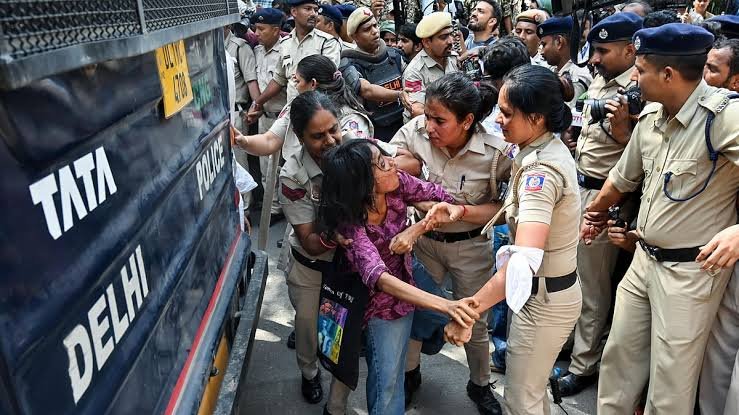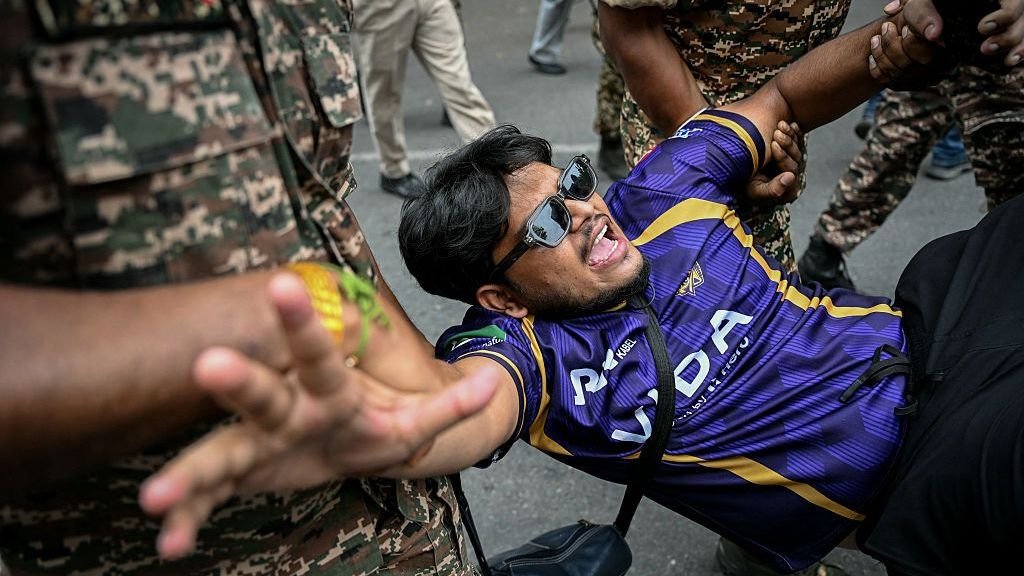
According to reports, three leaders of the CJP, Abhijeet Dipke, Saurav Das and Ashutosh Ranka, were released after the Executive Magistrate in Delhi ordered their detention for a night. The three were detained by the Delhi Police when their flight to Delhi landed on Saturday, following which they had announced a protest in Delhi demanding the resignation of the CEC, Gyanesh Kumar. The leaders were released after they submitted a surety bond of ₹50,000 on the grounds of maintaining peace and good behaviour for a year. The incident has led to debates as to what are the powers of the police to prevent offence which is ‘anticipated’ and how far do they go.
Why Were the CJP Leaders Detained?
The detention was carried out against the backdrop of protests over the Special Intensive Revision (SIR) of voter lists. The CJP and other opposition parties have claimed there are flaws in the revision of the voter list and have called for accountability from the Election Commission. The Election Commission and the ruling Bharatiya Janata Party have rejected allegations of politically motivated editing, saying voter deletions can occur due to deaths, relocations and voters becoming untraceable.
As reported, the three CJP leaders were arrested just before the demonstration was scheduled at Jantar Mantar on October 10, 2026. The Delhi Police registered cases under Sections 126 and 170 of the Bharatiya Nagarik Suraksha Sanhita, 2023 (BNSS), which are related to maintaining peace and can be used for preventive arrest to avert the commission of a cognisable offence. They were later produced before an Executive Magistrate and released the next morning.
Section 170 of the BNSS on Preventive Arrest: What does it say?
Section 170 of the BNSS allowed a police officer to arrest a person without warrant if he or she has reason to believe there is a ‘design to commit any cognisable offence’ and that the offence ‘cannot be otherwise prevented’. This provision was of a preventive type. Its aim was to prevent the contemplated offence rather than to punish a person for an offence that has been proved.
Nevertheless, it is not a carte blanche. Under section 170, it is provided that an individual arrest under the provision cannot, as a rule, remain in custody for longer than 24 hours unless some additional detention is necessary or permitted by law. The legal basis for an arrest can thus only be given in light of the statutory conditions and the information in the knowledge of the police. The fact that an individual might engage in protest is not, alone, enough to ensure that all six conditions for preventive arrest are satisfied.
How Does Section 126 Require a Person to Maintain Peace?
Section 126 of the BNSS enables an Executive Magistrate to proceed when Information is received that a person is dangerous to the peace, causes or is guilty of disturbing the peace or committing any wrongful act that is likely to disturb the peace. The Magistrate may give them the chance to show why they should not be required to give security for keeping peace for such a period, which cannot be more than one year.
The proceedings were, however, preventive and did not in themselves constitute a conviction on a criminal charge. The law makes a procedure open to the person against whom action is proposed, which he can adopt; and an order demanding security must be passed in accordance with this procedure. In the matter relating to the CJP, reports said that the leaders were released after submitting a surety of ₹50,000 to keep the peace for a year and remain of good behaviour. The complete terms of the order are necessary for in-depth knowledge of the expectation from each leader.
Does the One-Year Condition Prevent the Leaders From Protesting?
An order to keep the peace does not as a matter of law preclude an individual from attending a public protest. This depends on the precise wording of the order, and the law in each case. Peaceful protest and commission of an offence are two separate things, and expressing opposition to the government or public authorities does not amount to a breach of the peace.
Article 19(1)(a) safeguards freedom of speech and expression, and Article 19(1)(b) guards against the “right to assemble peaceably and without arms.” Any regulation of these rights is limited by the restrictions that the Constitution and law prescribe as “reasonable.” Ordinarily, the government can control the manner of demonstration only to the extent that the law considers necessary for addressing large-scale law-and-order issues.
Thus, the fundamental issue here is not whether there is scope for police to act preventively, but whether they have in fact taken a proportionate and rights-compliant step in this specific case. It would be premature to hold that the condition curtails protest by law or effectively proscribes future protests without seeing the entire order and the information on which the authorities relied.
What This Case Means for Civil Liberties
The current CJP leaders are exacerbating this dilemma concerning preventive policing and constitutional right to assemble. The BNSS empowers the police and Executive Magistrates to proceed when the procedural safeguards provided by law to prevent the breach of peace are fulfilled. Preventive powers are also circumscribed by the law and cannot be treated as a mere justification for crime.
While for organisers and participants the distinction is between a peaceful assembly and conduct which established a legal risk of commission of an offence, for the authorities, it is the legal foundations for detention, the requirement to act preventively and the procedural safeguards that remain key issues. The matter will thus be of interest in the broader debates around protests, preventive detention powers and democratic participation in India.