The UCC Bill, when legislated, will impact the daily lives of Bengali families across different communities and social spectrums of the State in a substantial way, ranging from the way a marriage is regulated to succession of property to how it addresses the contemporary issue of live-in relationships. For instance, the UCC framework will make a broad provision against polygamy. Currently, the different personal law systems permit the practice of polygamy on varying degrees, particularly under the Islamic and Customary law system prevailing in some of the Muslim sects.
Under the new legislation, any form of polygamous marriages would be explicitly disallowed across all communities in Bengal, a strict separation between religion and the regulation of matrimony.
Henceforth, marriage in Bengal will not only be regarded as an act governed by a chosen faith-based system, but as a registerable, state-acknowledged civil contract and public ceremony, subject to the dictates of the state. The existing laws that facilitate and recognize polygamous unions would also likely face deletion in this new scheme of the legislation. The proposed UCC bill also seeks to abolish the concept of child marriages. Under this new regime, an uniform age standard will be implemented for the solemnization of any marital union irrespective of the religious or sectarian affiliations of the couples.
Any marriage conducted or consummated between persons falling under the minimum age criteria prescribed by the state will be invalidated by the legal framework.
Furthermore, this uniform legal code for matrimony will also put a mandatory requirement for all citizens to register their marriages at the local governing state authorities. Such marriages without proper state sanction or registration will not enjoy the full legal sanctity under this proposed code, thereby raising concerns about marital property rights, maintenance, and custody issues if the marriage does not comply with registration laws. The state aims to bring such marriages within a regulated system for all.
It plans to replace existing individualised family law structures with a unified statutory framework on marriage and divorce. The UCC, if passed by the State Assembly, will be aimed at harmonizing diverse and separate existing personal law statutes into one common, binding code applicable to all residents of Bengal. As is the general aim of any Uniform Civil Code (UCC), it is intended to end discrimination and bring greater gender equality in family law by replacing several religiously or culturally specific personal law provisions, such as the Hindu Succession Act, the Muslim Personal Law, and other customary laws that apply differently to various religious and ethnic communities in Bengal.
Need Help With Your PhD or LLM Thesis?
Explore our thesis and dissertation writing support services for PhD and LLM students. Get subject-specific academic assistance for your research project.
Explore Our Services →It would seek to ensure a standard legal process and standard outcome in areas such as divorce, alimony, property division and succession.
The proposed legislation is also said to provide guidelines for the mandatory regulation and registration of live-in relationships. Such a provision is already incorporated in legislations adopted by some of the BJP ruled states, which require live-in partners to register their relationship. Adhikari made it clear that for Adivasis, Santhals, Kurmis and other such recognized indigenous communities of Bengal the proposed legislation shall have absolutely no application, in view of certain constitutional provisions. “Tribal populations have unique identities, unique cultural practices and are provided special provisions for the protection of these customs under the Constitution’s Fifth Schedule.
The state government understands the need to protect and preserve tribal identity,” he said, as he outlined that the draft code would apply only to non-tribal populations, ensuring a distinct set of protections and frameworks for its tribal citizens and addressing potential constitutional challenges to the code’s applicability on them.
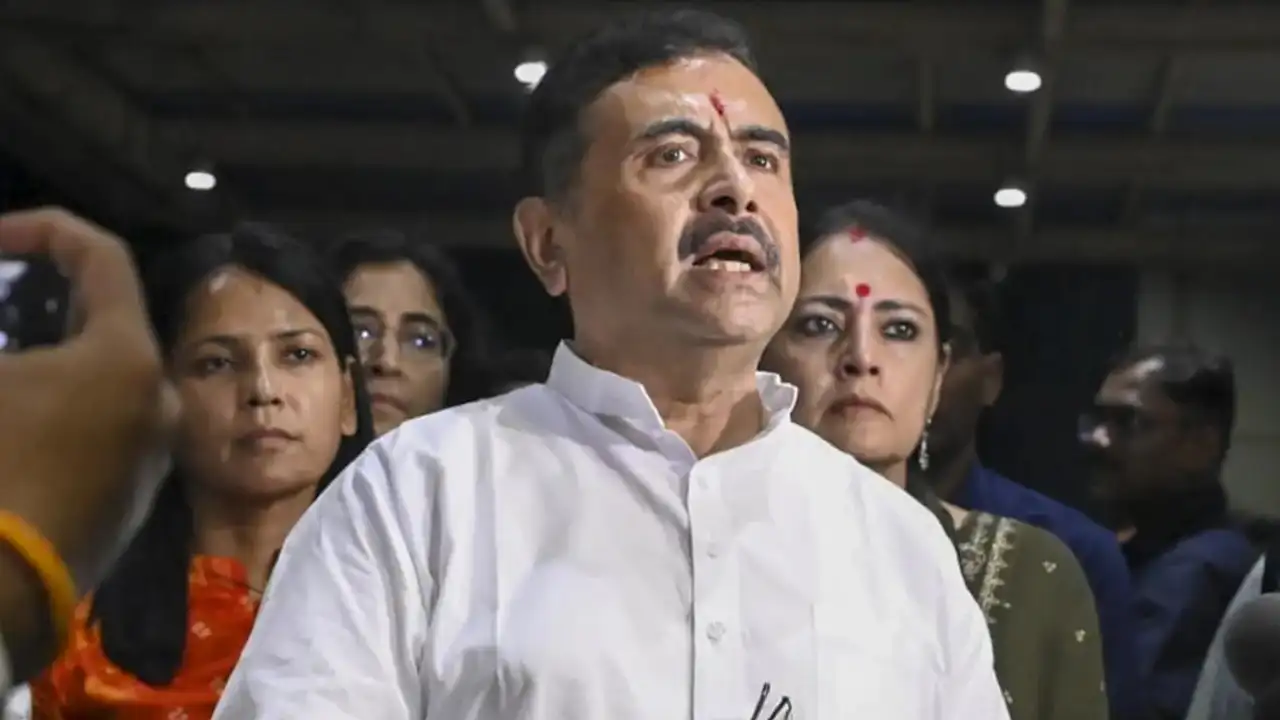
He stated that Chief Minister Suvendu Adhikari has formally announced plans for Bengal’s own Uniform Civil Code, which is likely to propose radical changes in marriage laws, adoption procedures and succession rights for all non-tribal communities in the State. He has expressed his desire to have the framework in place, even as a five-member committee has been established, led by former Supreme Court Justice Ranjana Prakash Desai, to frame the new draft law within a stringent four-week timeframe. Adhikari said his government would also incorporate the legislative frameworks already established for live-in relationships in the states of Uttarakhand and Gujarat in the new draft bill for Bengal.
“While many governments in other states like Gujarat and Uttarakhand have also prepared and enacted their version of a Uniform Civil Code to manage domestic disputes and bring harmony between different traditions, we, however, will ensure that we bring legislation for our non-tribal population while maintaining a balance between modernization and tradition. While preparing the draft law, care will also be taken that it does not conflict with our constitutional obligations to preserve tribal traditions. As part of the proposed legislation, we are working on bringing uniform law regarding marriage, divorce and inheritance across all religions within Bengal.
For the purposes of preparing the draft law, we are in consultation with experts and will be setting up a committee soon.
We are all set to have a uniform law regarding live-in relationship, just like Gujarat,” the Chief Minister stated, adding that for this legislation he is following in the footstep of PM Narendra Modi’s vision of one nation, one law. “For the purposes of developing a uniform legislation for West Bengal regarding marriage and divorce among other issues concerning the civil status of individuals, we have set up a five-member committee under the leadership of former Supreme Court judge Ranjana Prakash Desai. This Committee, will submit the draft legislation for Uniform Civil Code in the state in the next four weeks, after taking into consideration the socio-demographic nuances of Bengal. Chief Minister Suvendu Adhikari stated in the state legislative assembly yesterday, July 2nd, that Bengal has completed the initial phase of initiating a uniform Civil Code in the state and soon the draft law will be placed before the state cabinet.
He further asserted that this legislation is likely to come into effect within the next 1.5 years.
While several states in India, most notably Gujarat and Uttarakhand have been active in drafting their own version of UCC, it is only after an initial phase of legislative groundwork for its establishment that Bengal seems poised to move the framework towards its formal implementation and introduction. “The first stage for the adoption of the Uniform Civil Code in the state has been successfully completed, and the proposal would be discussed in the cabinet in the upcoming July session of 2026,” Adhikari declared from the state Assembly yesterday in one of his statements that he made on July 2nd. In a significant development that indicates a political shift in the West Bengal administration with regard to personal law, Chief Minister Suvendu Adhikari today officially confirmed the intention to bring in a Uniform Civil Code (UCC) in the state.
Adhikari stated that the state cabinet would receive the initial draft for the UCC on July 2nd, 2026, marking a decisive departure from the practice of relying on religion-based personal laws to govern matters of marriage, property and inheritance. The government of West Bengal has now set a precedent in motion with an active attempt to implement a uniform law. “We have completed the first stage to legislate on uniform laws, the state cabinet will have a first discussion of the Uniform Civil Code on July 2, 2026.
The drafting has begun and we hope to see this legislated and enacted within the next one-and-a-half years,” Adhikari informed the State Assembly yesterday, July 2nd, a move that signals a move towards bringing greater uniformity and gender equality in the personal law spectrum across Bengal.
West Bengal CM Suvendu Adhikari has revealed plans to introduce a Uniform Civil Code in the state, and his cabinet is expected to review the draft proposal on July 2, 2026, in a significant departure from the established personal law systems that have been in place in the state. The new framework is intended to bring uniformity in laws related to marriage, adoption, divorce, and inheritance. West Bengal Chief Minister Suvendu Adhikari has taken concrete steps to introduce a Uniform Civil Code in the state, with the proposal slated to be presented to the state cabinet for a first look on July 2, 2026. This move marks a fundamental departure from the current system of distinct personal laws governing marriage, property, and inheritance for various communities across Bengal.
This legal reform will be the state’s version of the national debate surrounding uniformity in personal law, bringing with it promises of greater gender equality, reduced legal disputes, and a modern approach to domestic arrangements.
With a timeline of 1.5 years for legislative enactment, Bengal is poised to embark on a significant transformation in its legal landscape concerning personal matters.