Steven Spielberg is a giant of Hollywood, nobody can dispute that. Yet, with his latest release hitting screens this weekend, there is a bizarre quietness hanging over the industry. Universal Pictures built Disclosure Day up to be the mega summer 2026 sci-fi event of the season, however, the opening weekend figures are now out. The film grossed a total of 44 million dollars in the domestic market. The global cume stands at approximately 92.9 million.
To the casual viewer, these numbers appear, on the face of it, reasonable. In fact, they mark Spielberg’s best opening weekend for an original film in quite some time. It is only when you delve into the figures that the full extent of the failure becomes apparent. The film was produced on a budget of 115 million dollars, and the marketing team dropped a further 80 million dollars in their attempt to fill seats. The film needs to gross at least 300 million dollars merely to break even. The pre-release buzz and the audience reaction following the premiere both now have a decidedly negative trajectory, with audiences handing the film a dire ‘B’ CinemaScore-a notoriously low grade for a mainstream summer release, which almost always translates to a massive slump in takings the following weekend. Audiences who attended opening night appear to have bought their tickets on the director’s name alone, with survey results showing they left the screening disappointed.
A Script Full of Holes
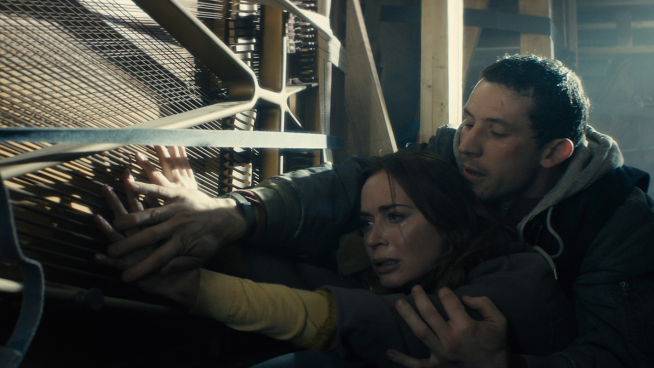
The most significant criticism, however, has been directed towards the film’s script, penned by David Koepp, who also collaborated with Spielberg on Jurassic Park and War of the Worlds. One would expect a tight, coherent narrative from this pairing. Instead, reviewers and ticket-buyers have bemoaned a number of gaping holes in the narrative of Margaret Fairchild, the cheerful Kansas City meteorologist portrayed by Emily Blunt, who along with cybersecurity expert Daniel Kellner (Josh O’Connor), discovers a secret cover-up by the US government of a genuine alien presence on Earth for the last century. The logic and consistency of the plot were dissected online from opening night, with the climax of the film-in which the duo hacks into a local television station to broadcast their evidence to the world-widely condemned as nonsensical in an era of instant global internet connectivity and real-time social media exposure.
Reviewers highlighted the complete lack of realism in the government assassins attempting to apprehend the two amateur investigators; these professionals cannot even manage to keep tabs on two civilians who are seemingly leaving a digital trail everywhere they go. Furthermore, audience complaints have frequently focused on the alleged possession element of the film, in which the extraterrestrials supposedly communicate through a possessed Blunt, who begins speaking in strange, guttural click sounds and jumbled sentences over live broadcast-a scene many viewers reported finding ridiculous and, worst of all, humorous, rather than the intended terrifying spectacle. The film’s premise was marketed as a sharp and modern exploration of government conspiracy, a theme that feels remarkably anachronistic, especially in a movie that struggles so demonstrably with even basic concepts of modern surveillance and communication systems.
Blurry Saucers and Rushed Pixels
For a director like Spielberg, whose work has historically been synonymous with high-quality visual effects (Jurassic Park still stands up decades later), the reactions to Disclosure Day’s visuals have been scathing. Even the Super Bowl trailer dropped earlier this year drew immediate criticism for the surprisingly blurry, almost out-of-focus appearance of the flying saucers. This blurriness has, much to the dismay of audiences, remained in the final theatrical cut of the film. It is revealed that the aliens are in fact shapeshifters, capable of taking on various animal forms on Earth, such as stags and birds. VFX professionals commenting on the film online have been particularly vocal, highlighting the unnervingly rubbery appearance of these digital creations and the complete failure to integrate them smoothly with the live-action backgrounds. The final invasion sequence is particularly bewildering, descending into a muddy, pixelated jumble of grey and blue colours that look more like the CGI cutscene from a second-rate video game than a summer blockbuster. The flat lighting and lack of any kind of sharp detail contributed further to the public’s growing disillusionment; with a budget of 115 million dollars, the quality was so bad that audience members on Twitter and Reddit complained they were unable to clearly distinguish what was happening during the climactic scenes, which relied heavily on shaky camera work and fast cuts. It is the widespread feeling that the VFX team was given an unfeasibly tight deadline to complete the project in time for its June release.
Losing to a Micro-Budget Horror Flick
The true story of the weekend, however, is not Spielberg’s flop, but rather the unexpected success of an independent horror film, Obsession, directed by former YouTuber Curry Barker. The low-budget feature was produced for less than one million dollars before being acquired by Focus Features for 15 million. Now in its fourth week of release, the film has pulled in a remarkable 19 million dollars this weekend alone, taking its total to 286 million globally. The generation of film-goers known as ‘Gen Z’ appears to have collectively ignored the big Spielberg movie, choosing instead to flock to the cheap horror alternative. Demographically, 41 percent of Disclosure Day’s audience was aged 45 or older, and it seems the expensive sci-fi epic simply failed to connect with younger audiences, who considered it an outdated piece of filmmaking.
The Financial Reality for Universal
This news leaves Universal Pictures in a precarious position. Kristie Macosko Krieger produced the film alongside Spielberg, and the pair clearly hoped to recapture some of the magic of Close Encounters of the Third Kind. Despite heavily promoting the film, including trying to link it to real-world projects such as the SETI Institute and alien disclosure protocols, their marketing efforts failed to impress ticket buyers. The studio will now watch nervously to see just how much ticket sales decline by next Friday. Executives at Universal are now faced with the prospect of a film that needs more than an additional 200 million dollars simply to recoup its investment, after placing their bets on a legendary director to deliver them a blockbuster, only to receive a film widely criticized for its nonsensical plot and sub-standard visuals. Analysts have already begun to adjust their financial projections for the studio downwards, and the coming weeks will reveal whether international territories can do enough to save what looks like a disastrous investment.