I have always been fascinated by the poem ‘Inshaji utho ab kooch karo’ by the Pakistani Urdu poet Ibne Insha ( 1927-78 )
https://en.wikipedia.org/wiki/Ibn-e-Insha
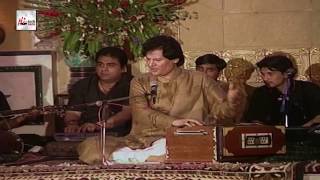
It has been sung beautifully by a great Pakistani singer, Asad Amanat Ali Khan
The words of the poem are :
Insha ji utho ab kooch karo
is shahar mein jee ko lagaana kya ?
Need Help With Your PhD or LLM Thesis?
Explore our thesis and dissertation writing support services for PhD and LLM students. Get subject-specific academic assistance for your research project.
Explore Our Services →vahashi ko sukoon se kya matalab ?
jogi ka nagar mein thikaana kya ?
is dil ke darida-daaman mein
dekho to sahi socho to sahi
jis jholi mein sau chhed hue
us jholi ko phailaana kya ?
shab beeti chaand bhi doob chala
zanjeer padi darvaaze pe
kyon der gaye ghar aaye ho ?
sajani se karoge bahaana kya
Us husn ke sachhe moti ko
Hum dekh saken, par chhoo na saken
Jise dekh saken par chhoo na saken
Woh daulat kya woh khazaana kya ?
jab shahar ke log na rastaa dekhen
kyon ban mein na jaa bisraam kare ?
deewaanon ki si na baat kare
to aur kare deewaana kya ?
Insha ji utho ab kooch karo
is shahar mein jee ko lagaana kya ?
Insha ji utho ab kooch karo
‘इंशा’-जी उठो अब कूच करो इस शहर में जी को लगाना क्या
वहशी को सुकूँ से क्या मतलब जोगी का नगर में ठिकाना क्या
इस दिल के दरीदा दामन को देखो तो सही सोचो तो सही
जिस झोली में सौ छेद हुए उस झोली का फैलाना क्या
शब बीती चाँद भी डूब चला ज़ंजीर पड़ी दरवाज़े में
क्यूँ देर गए घर आए हो सजनी से करोगे बहाना क्या
उस हुस्न के सच्चे मोती को हम देख सकें पर छू न सकें
जिसे देख सकें पर छू न सकें वो दौलत क्या वो ख़ज़ाना क्या
जब शहर के लोग न रस्ता दें क्यूँ बन में न जा बिसराम करे
दीवानों की सी न बात करे तो और करे दीवाना क्या
What do these words mean ? The poem is of course metaphorical, like much of Urdu poetry.
https://www.hastakshepnews.com/2024/08/understanding-urdu-poetry-insights-by.html
https://countercurrents.org/2025/03/justice-with-urdu
Urdu poets often write their verses not in a direct way but in a roundabout way, conveying their meaning indirectly by hints, allusions and indications. The result is that the same verse can have two or even multiple meanings. Sometimes it can even have a meaning which the poet never contemplated, but is invented by the reader using his creative imagination !
The greatest Urdu poet Ghalib was of the view that the language of poetry should not be the same as the spoken language of the common man. Ghalib had a horror of the commonplace in expression, and this often makes his poetry obscure.
Urdu poetry has often an outer, literal, but superficial meaning, and an inner, deeper, real meaning. Hence to understand Urdu poetry one must wrack his brains, and try to go behind the literal and superficial meaning, and find out the real, inner meaning of what the poet is really trying to convey.
A good example is the great Urdu poet Faiz’ famous poem ‘Gulon mein rang bhare baad-e-naubahaar chale’, which I have explained in my article below :
https://nayadaur.tv/25-Jun-2021/the-true-meaning-of-faiz-s-poem-gulon-mein-rang-bharay
Now coming back to Ibne Insha’s poem, what is he really wanting to say and convey ? As I said above, Urdu poetry can have different meanings, and the reader can even give it a meaning not thought of even by the poet who composed it.
One does not know what Ibne Insha had in mind when he wrote this poem, as he never explained it himself..
One interpretation is that one’s country has become so disgusting ( for various reasons ) that one should leave it, and migrate elsewhere.
But I have given it my own interpretation. According to me, far from suggesting that one should leave the country, it means that, like a patriotic revolutionary, one should struggle to change the country, make it prosperous, and fit to live in.
The most crucial word in the poem is ‘kooch’. What does the poet mean when he says ” Ab kooch karo ” ? One interpretation of the word ‘kooch’ is certainly to migrate, flee, and escape. But there is another interpretation, and that is to march forth, as is done by an army.
In my opinion, patriots should adopt the second interpretation, and not succumb to escapism.
According to this interpretation, the words in the poem ” Is shehr mein jee ko lagaana kya ? ” does not mean that one should forget one’s country ( as the literal interpretation suggests ), but it means that one should hate the conditions in the country as they are today, and should fight to make them better.
Similarly, the words ” Van mein vishram karein ” ( one should retire to a forest ) should not be understood literally. According to my interpretation, the word ‘van’ ( forest ) should not be understood literally, but metaphorically, and it really means a revolution. In other words, patriots can only get peace of mind and contentment when they are on the revolutionary path, fighting for the creation of a prosperous country.
https://indicanews.com/justice-markandey-katju-a-call-to-indian-patriots
Attachments area