The Incident That Sparked the Complaint
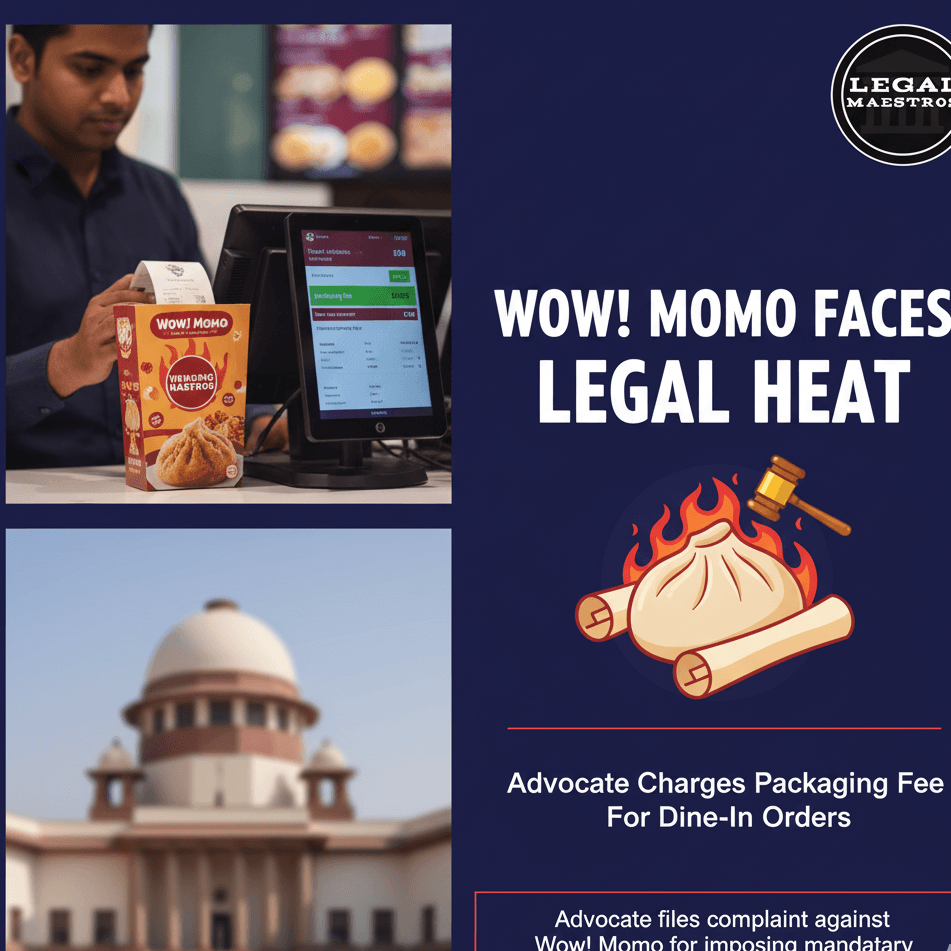
The problem came into the limelight when one of the advocates visited a Wow! Momo outlet for a meal. He had eaten his food in the restaurant premises and was surprised to get his final bill. Besides the amount of the food items and the applicable taxes, the bill also had a separate line item that was described as a packaging fee. This additional fee was confusing because his was a dine-in meal, which was supposed to be served on plates and eaten at some table within the restaurant.
Raising an objection to the fee, the advocate has indicated the discrepancy to the restaurant employees, wherein there was no packaging of his order, thus the charge was completely unwarranted. The food had not been packed to take away and therefore he argued that the charge was illogical and constituted unfair inflation of the bill. This fee had been requested on a dine-in order and the advocate could not get an impressive explanation of the same by the restaurant, therefore he initiated a formal legal action against the company.
This single case has now been used as a foundation to a legal inquiry that casts doubt upon a potential practice that is more prevalent than previously imagined. It brings into the limelight the need of consumers to thoroughly look at their bills and then pay attention to them because even in those small and unjustified charges, they might fail to notice. The rationale that the advocate seeks to take the case to court is to seek the company to be responsible to what he considers a misleading billing practice.
The Legal Standpoint on Unfair Charges
The legal complaint against Wow! Momo is based on the principles of consumer protection law, which are aimed at protecting the customers against unfair and misleading trade practices. The crux of the argument is that a restaurant has no right in law to take payment of a service not rendered. To a dine in customer the service charge, which includes using crockery, cutlery and the overall restaurant atmosphere, would be included in the price of the menu of the food stuffs.
According to the complaint, the separate packaging fee charged on a meal that has not been packed in itself is a clear violation of misrepresentation. It is an upcharge on a phantom service, which makes the overall cost of the customer unjustified. According to legal experts, such practices are against the Consumer Protection Act, which is misleading and exploiting because it is based on the premise that the bill will only comprise of the ordered food and the mandatory government taxes.
The ruling in the precedents of different consumer courts in the country has always been against such arbitrary charges. There have been rulings by the courts that the restaurants can not impose additional fees on services that are essential to the dining process. This case against Wow! The same principle is likely to apply to Momo: the packaging fee of a dine-in delivery might be considered an unfair and restrictive trading practice which was implemented to artificially raise profits at the cost of the consumer.
Need Help With Your PhD or LLM Thesis?
Explore our thesis and dissertation writing support services for PhD and LLM students. Get subject-specific academic assistance for your research project.
Explore Our Services →Industry Practices and the Company’s Position
While Wow! Momo has not given an elaborate response in the mass media and corporations that have been accused of this tend to defend by saying that such allegations were due to the presence of a standard billing system. They could have their point-of-sale (POS) software in such a way that it automatically adds a packaging charge to all orders regardless of whether they are a dine in, take away, or a delivery. This is usually carried out in order to simplify the billing procedure particularly when it comes to chains with a lot of takeaway business.
But the morality and the law of the case would not allow a person to overcharge a customer just because it would be convenient to the business. It is the responsibility of the company to make sure that its billing system is advanced to the extent that it would distinguish one type of order, and would impose a charge on it. Lack of this, either purposefully or caused by a system oversight, will lead to the customer being punished in an unfair manner.
Wow! is not the only company practicing this. Momo as well as many consumers have probably paid the same or close charges in other restaurants without even noticing. Most restaurants have begun implementing different additional fees on the bills including service fees to miscellaneous fees. The case of the ongoing legal dispute is a trial case that may have a domino effect on the food and beverage industry because other organizations will also be compelled to audit and correct their own bills in order to make them open and fair.
Empowering the Consumer
This was a court case against a large food chain such as Wow! Momo not only a quarrel over some rupees, but a big stride towards more consumer awareness and empowerment. It delivers a great message that a single consumer possesses the right and capability to challenge unjust business conduct and hold big companies responsible. The case shows the need to be a customer watchdog.
The result of this complaint would be a good precedent, which might result in the establishment of more explicit rules on the practice of charging arbitrary fees by restaurants and an increase in the enforcement of the same. It can prompt the regulatory agencies to come up with certain laws that clearly outlaw charging packaging fees to those that dine in. This would compel the whole industry to have more transparent bills and pricing system.
Such legal actions ultimately have a tremendous effect in checking the authority of the businesses to remind them of their duties to their customers. It stresses the point even better that fairness and transparency are not only good ethics but also legal mandates. This case publicity will hopefully make more individuals question their bills and speak up in case there are differences between them.