Law Notes

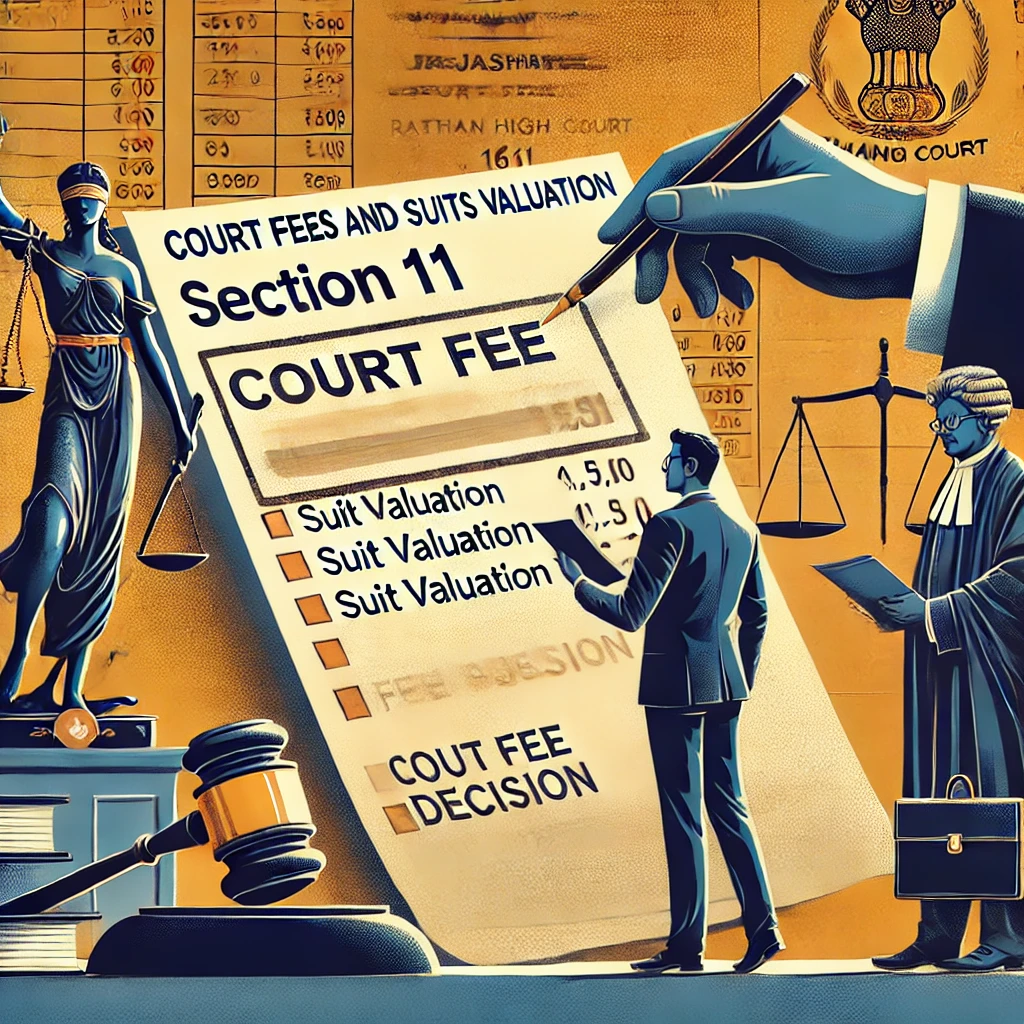
Deciding the Proper Court Fee: Section 11 of The Rajasthan Court Fees and Suits Valuation Act, 1961

This abstract discusses Section 11 of the Rajasthan Court Fees and Suits Valuation Act, 1961, which prescribes how the proper court fee is to be determined in Rajasthan. It authorizes courts to inquire and determine the right fee where there is a dispute in respect of valuation or adequacy of fee so that fairness is ensured in judicial process. The section provides for the stay of proceedings pending payment of proper fees, laying emphasis on statutory compliance. This process avoids underpayment and protects revenue collection while ensuring equity.

Law Notes

Understanding Court Fees in Rajasthan: Sections 9 & 10 of The Rajasthan Court Fees and Suits Valuation Act, 1961

This abstract analyzes Sections 9 and 10 of the Rajasthan Court Fees and Suits Valuation Act, 1961, relating to court fee determination in Rajasthan. Section 9 deals with documents coming within more than one fee description and provides for the highest fee where it applies, with special over general descriptions having priority. Section 10 requires plaintiffs to provide a comprehensive statement of the subject-matter of the suit and value for market-value-based fees, guaranteeing proper fee evaluation. Such provisions simplify judicial procedures, improve transparency, and make fee computation standardized.

Law Notes

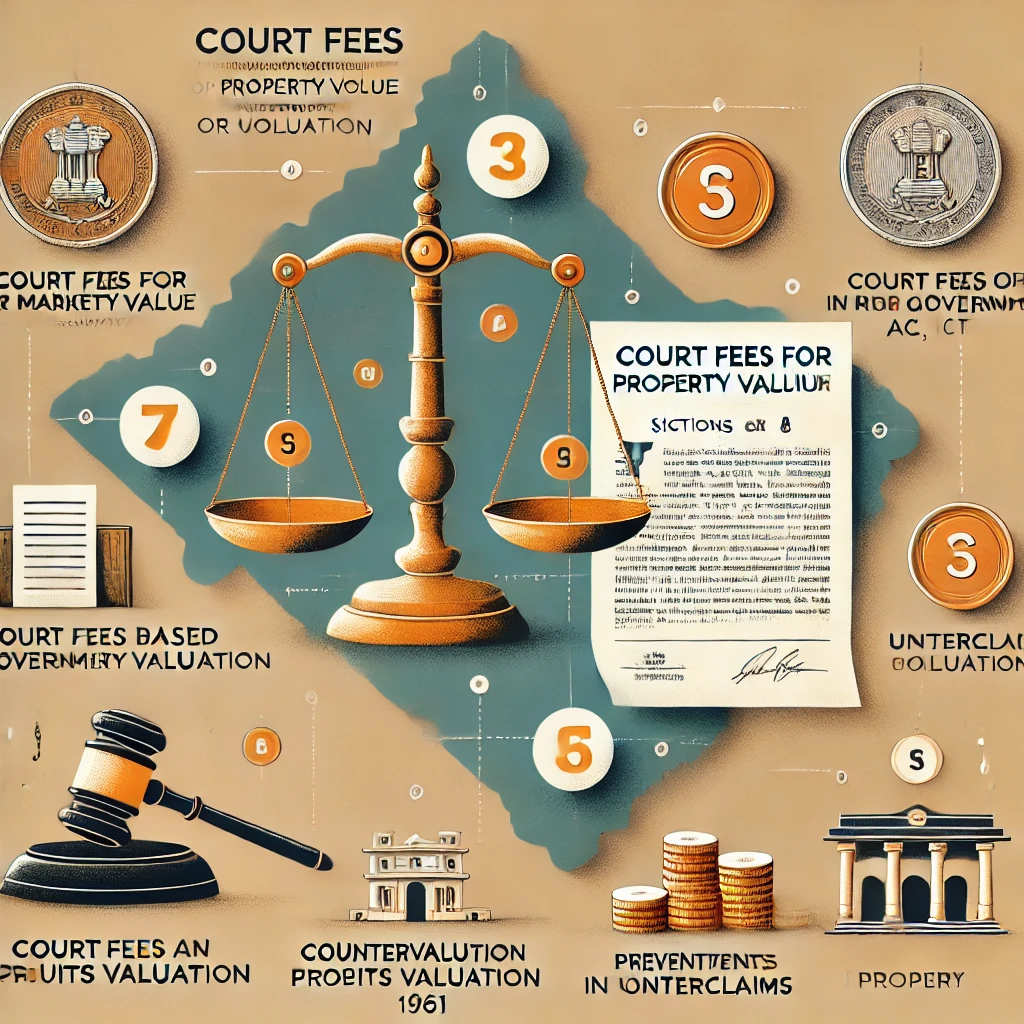
Court Fees for Property Value and Counterclaims: Sections 7 and 8 of the Rajasthan Court Fees and Suits Valuation Act, 1961

Sections 7 and 8 of the Rajasthan Court Fees and Suits Valuation Act, 1961 define court fees for property valuation and counterclaims. Section 7 mandates that court fees for property-related suits be calculated based on the market value or government valuation. Section 8 ensures that counterclaims are treated as separate suits, requiring an independent fee assessment. These provisions prevent undervaluation and ensure fairness in litigation. Understanding these sections is essential for litigants, lawyers, and courts to determine the correct court fee liability and comply with judicial procedures.

Law Notes

Court Fees for Multiple Claims in a Suit : Section 6 of the Rajasthan Court Fees and Suits Valuation Act, 1961

Section 6 of the Rajasthan Court Fees and Suits Valuation Act, 1961 addresses court fees on multiple claims in a suit. Where a suit presents multiple distinct claims, separate court fees shall be paid by each claim unless they are intrinsically related. The Act provides for just valuation of suits and avoids abuse of the judicial process by undervaluing claims. Exemptions or reductions may be allowed in certain cases. An understanding of this provision assists litigants and lawyers in computing proper fees and adhering to procedural mandates.

Law Notes

Key Provisions of the Rajasthan Court Fees and Suits Valuation Act, 1961 : Section 4 and 5

Rajasthan Court Fees and Suits Valuation Act, 1961 regulates fees in Rajasthan courts to ensure sound suit valuation and adequate fee schemes. Court fees are divided into fixed fees and ad valorem fees based on case type and suit value. Exemptions and concessions have also been provided under the Act to benefit the economically weaker segments. Payment may be made in the form of stamp papers as well as through online transactions. It is important that litigants and legal practitioners understand these provisions to follow court procedures efficaciously. The Act is significantly responsible for simplifying court procedures while ensuring fiscal responsibility within the judiciary.

CRIMINAL LAW

Understanding Court Cognizance and Sanction Requirements under the Bharatiya Nagarik Suraksha Sanhita, 2023

The Bharatiya Nagarik Suraksha Sanhita (BNSS), 2023, makes court cognizance and sanction more clear, superseding the Criminal Procedure Code, 1973. Sections 190 to 199 regulate cognizance, empowering magistrates to proceed on complaints, FIRs, or suo motu, with electronic submission provisions. Section 195 requires pre-sanction of competent authorities for prosecuting public servants or certain offences, striking a balance between accountability and safeguarding. Validity of sanction needs to be checked by the courts before proceeding, upholding legal integrity. These provisions eliminate redundancies in judicial procedures, increase accessibility, and respond to contemporary challenges in India’s criminal justice system.

CRIMINAL LAW

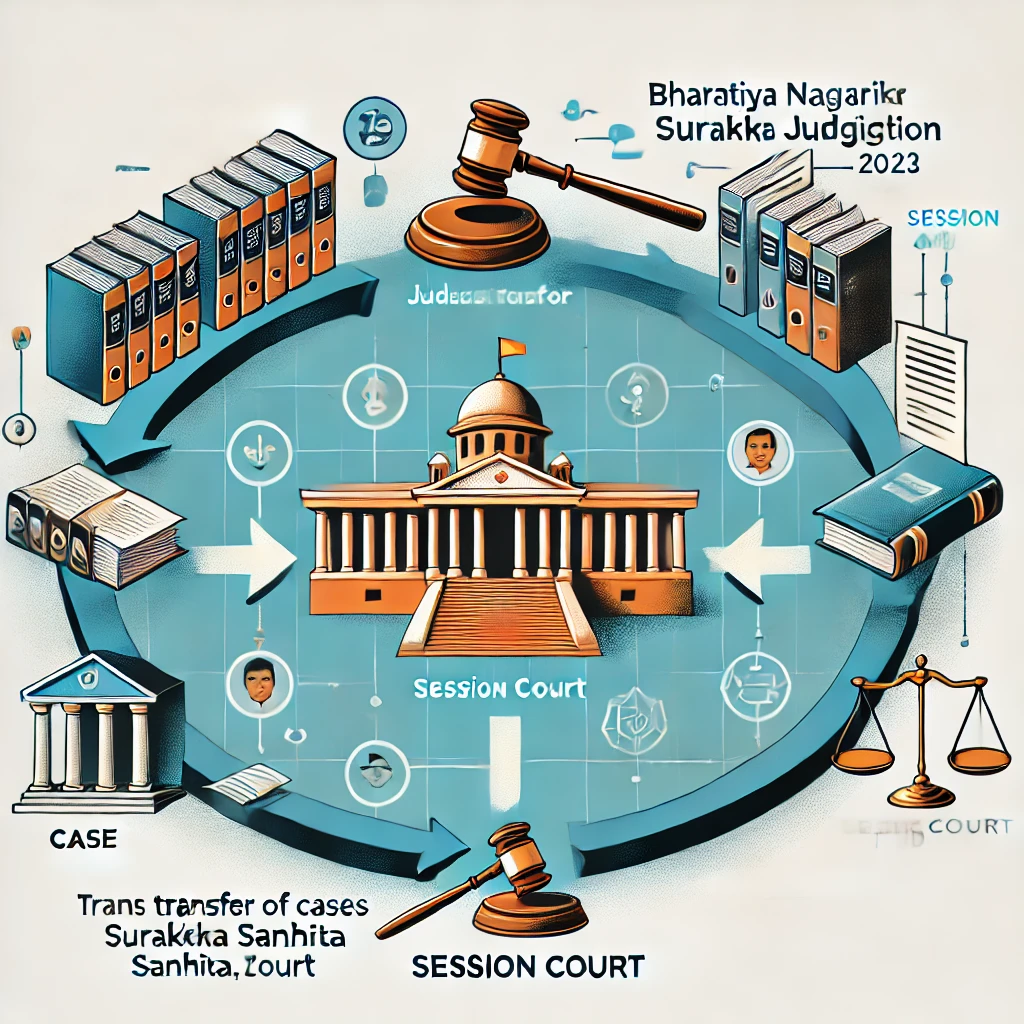
Judicial Transfer of Cases and Session Court Jurisdiction under Bharatiya Nagarik Suraksha Sanhita, 2023

The Bharatiya Nagarik Suraksha Sanhita (BNSS), 2023, improves judicial efficiency by streamlining case transfers and Sessions Court jurisdiction, superseding the Criminal Procedure Code, 1973. Section 406 authorises High Courts and the Supreme Court to transfer cases from one court to another for equity or public interest. Sessions Courts under Section 26 deal with grave offences tried only by them, with enhanced powers to determine complicated cases. The BNSS harmonizes electronic case management processes to facilitate quick transfers and trials. These provisions seek to eliminate jurisdictional overlaps and accelerate the delivery of justice in India’s criminal justice system.

CRIMINAL LAW

Initiating Legal Proceedings Under the Bharatiya Nagarik Suraksha Sanhita, 2023

The Bharatiya Nagarik Suraksha Sanhita (BNSS), 2023, rewrites the initiation of proceedings in India in place of the Criminal Procedure Code, 1973. Sections 190 to 199 provide that proceedings start with a complaint, FIR, or magistrate’s cognizance, with a focus on accessibility and efficiency. The BNSS allows for electronic filing of complaint and evidence, bringing access to justice into the digital age. Magistrates may issue summons or warrants on the basis of preliminary inquiries, with victim participation provisions. These reforms seek to minimize delays, increase transparency, and keep pace with digital progress, guaranteeing a responsive criminal justice system.