BNSS

Sections 9, 10, and 11 of the Bharatiya Nagarik Suraksha Sanhita, 2023 – Judicial Magistrates and Special Magistrates

This page provides an explanation of Sections 9 to 11 of the Bharatiya Nagarik Suraksha Sanhita, 2023. The article focuses on the institution of Judicial Magistrates and Special Judicial Magistrates, as well as their classification and their functions. The provisions of the law are simplified through the use of thorough explanations and illustrations that are applicable.

BNSS

Sections 6, 7, and 8 of the Bharatiya Nagarik Suraksha Sanhita, 2023 – Establishing a Unified Framework for Criminal Courts: Court Classes, Sessions Divisions, and Operational Protocols

With a particular emphasis on Sections 6, 7, and 8, this article provides an explanation of the composition and organizational structure of criminal courts and offices that fall under the jurisdiction of the Bharatiya Nagarik Suraksha Sanhita, 2023. Using straightforward language, it provides information regarding the categorization, jurisdiction, appointments, and operational procedures of the judicial system.

CRIMINAL LAW

Section 25 of the Bharatiya Nyaya Sanhita 2023 Addresses Acts Causing Harm Done with Consent Without Intent to Cause Death or Grievous Hurt

Section 25 of the Bharatiya Nyaya Sanhita, 2023, stipulates that an act not intended or known to likely cause death or grievous hurt is not an offense if the person harmed is over eighteen and has consented to the risk. For example, if two adults agree to fence for amusement and one is injured without foul play, no offense is committed.

CRIMINAL LAW

Section 24 of the Bharatiya Nyaya Sanhita 2023 Holds Individuals Accountable for Offenses Requiring Intent or Knowledge Committed While Intoxicated

Section 24 of the Bharatiya Nyaya Sanhita, 2023, addresses the issue of criminal liability in cases where an offense requires specific intent or knowledge, and the act is committed under intoxication. According to this provision, if an individual voluntarily becomes intoxicated and commits such an offense, they are held legally responsible as if they possessed the required intent or knowledge, regardless of their impaired state. However, if the intoxication was involuntary—meaning the substance was administered without their knowledge or against their will—this may serve as a defense, acknowledging that the individual lacked the capacity to form the necessary intent or knowledge due to the involuntary intoxication.

CRIMINAL LAW

The Pollachi Sexual Assault Case: A Comprehensive Analysis of Applicable Indian Laws and Political Controversies  

The sexual assault case in Pollachi brought to light a terrible plot in which a group of men in Pollachi, Tamil Nadu, methodically enticed young women under false pretences, sexually assaulted them, videotaped the activities without obtaining their consent, and then exploited the videos to extort additional sexual favors or money from the young ladies. The scandal, which was brought to light at the beginning of 2019, aroused significant concern regarding the protection of survivors, the safety of women in public settings, and the breaches in police procedures. In May of 2025, a special Mahila Court in Coimbatore found nine men guilty of the crime and sentenced them to life imprisonment till death. Additionally, the court ordered that the survivors get considerable compensation. This article covers the specifics of the case, the investigation, the judicial decision, the pertinent provisions of the Bharatiya Nyaya Sanhita, 2023, and the political controversies that followed, with the goal of highlighting the lessons that can be learned for the purpose of revising the law and providing assistance to victims.

CRIMINAL LAW

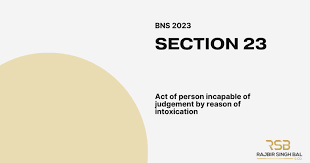
Section 23 of the Bharatiya Nyaya Sanhita, 2023: Acts Committed Under Involuntary Intoxication

Section 23 of the Bharatiya Nyaya Sanhita, 2023, presents a sophisticated outlook on criminal liability with regard to intoxication. Distinguishing between voluntary and involuntary intoxication, the legislation ensures that people are held accountable in a fair manner, bearing in mind their state of mind and the situation causing them to become impaired.