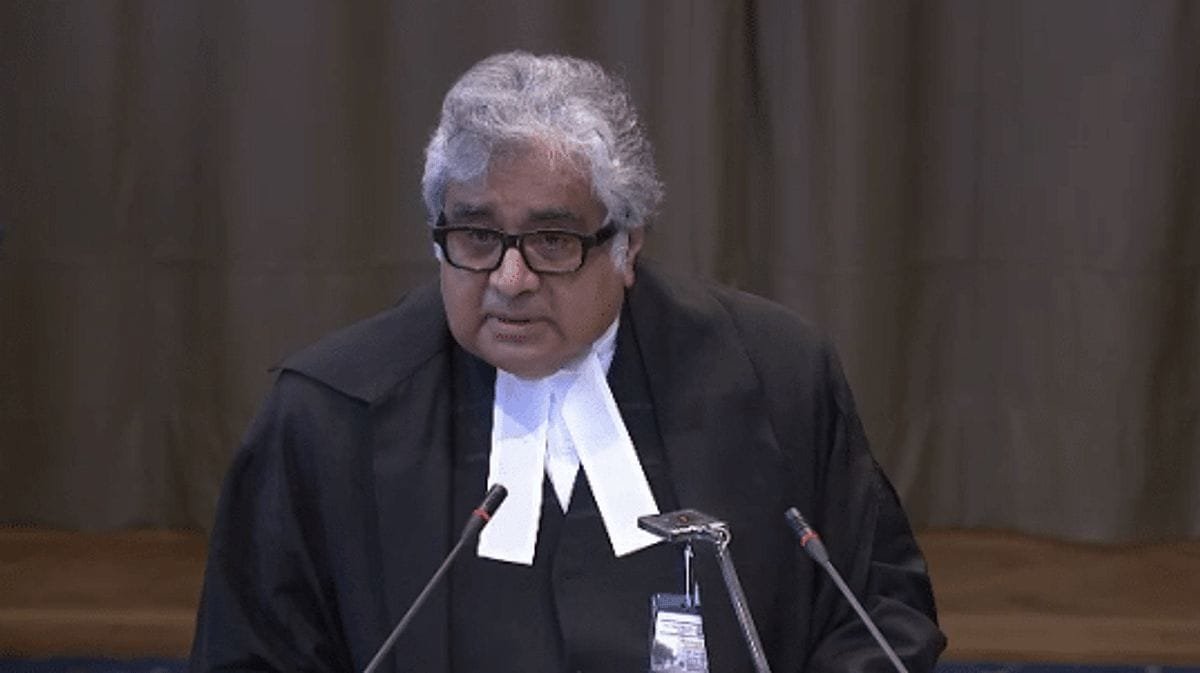
Harish Salve to Join NLUD as Professor
New Delhi, 13 August 2025: National Law University, Delhi, has welcomed the eminent lawyer and jurist, Senior Advocate Harish Salve,…
Keeping Pace with Legal Change
New Delhi, 13 August 2025: National Law University, Delhi, has welcomed the eminent lawyer and jurist, Senior Advocate Harish Salve,…
The Supreme Court restored compensation to a widow in a fatal road accident case, overturning the High Court’s dismissal. It upheld the deceased’s wife’s eyewitness account, rejected the insurer’s claim of driver negligence and collusion, and affirmed the mini-truck caused the accident. The Court also factored partial pension benefits into compensation and re-apportioned 85% to the widow, with 15% shared equally among their adult children.
A Lucknow court sentenced a woman to 7.5 years in prison for filing a false gangrape and SC/ST atrocity case, highlighting the serious consequences of misusing protective laws. This landmark judgment sets a precedent for stricter scrutiny of sensitive cases and aims to balance justice for genuine victims with safeguards against false accusations.
Advocate Chandra Sen Yadav has filed a review petition in the Supreme Court challenging its May 20 judgment reinstating a mandatory three-year legal practice requirement for civil judge (junior division) exams. The petition argues this rule violates Articles 14 (equality) and 16 (equal opportunity in public employment) of the Indian Constitution, disproportionately excluding recent graduates who prepared under prior eligibility criteria.
On 16 June 2025, SEBI proposed new rules requiring Special Purpose Distinct Entities to disclose key details about securitized debt instruments (SDIs) twice a year. These disclosures—covering maturity, credit quality, loan ratios, and material events—must be submitted to SEBI and relevant stock exchanges, aiming to enhance transparency and help investors make informed decisions about SDIs.
In a historic judgment on 23rd May 2025, the Supreme Court of India ruled that maternity leave is a constitutional right and cannot be denied based on the number of children. The Court emphasized that such leave is integral to women’s reproductive rights, overriding state-imposed limits and aligning with both national and international legal standards.
The Supreme Court ruled that an unregistered sale agreement cannot confer ownership of immovable property, even if later transactions are registered. Only a properly registered sale deed transfers legal title. In this case, Bhavana Society and its buyers had no valid claim, as their title traced back to an unregistered 1982 agreement, making all subsequent sales legally ineffective
When Mangesh died from a gunshot via his friend Vaibhav’s father’s pistol, conflicting narratives emerged. While the High Court emphasized Vaibhav’s suspicious conduct post-incident, the Supreme Court acquitted him, citing lack of motive, inconclusive bullet trajectory analysis, and the prosecution’s failure to disprove suicide. The judgment highlights evidentiary thresholds in circumstantial cases and the accused’s right to silence when the state’s case remains unproven
In Sharad Birdhichand Sarda vs. State of Maharashtra, the Supreme Court set out the five golden principles for relying on circumstantial evidence in criminal trials, stressing that every link in the chain must be conclusively established and exclude all reasonable doubt, ensuring that conviction is based only on evidence that points solely to the accused’s guilt.
On May 9, 2025, the Supreme Court ruled that police cannot conduct narco-analysis without the accused’s consent, emphasizing that such tests violate Articles 20 and 21 of the Constitution. The Court also declared the Rajasthan High Court’s precedent in Sunil Bhatt v. State unsustainable, affirming that narco-test results alone are not admissible evidence and cannot justify conviction.