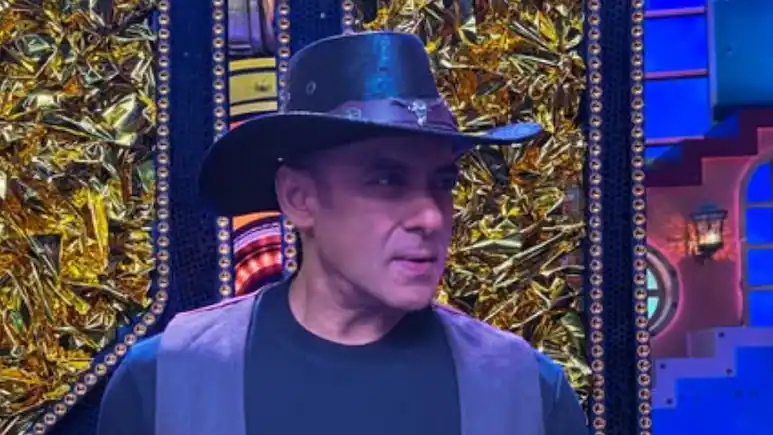
“Treat a celebrity camera with respect, or you may have to face action”, explains Salman Khan, the leading Bollywood actor, has warned photographers that they may take action against them if they continue to take inappropriate photographs of actresses when they do not want to be photographed. This issue was again raised by actor Salman Khan in the recent episode of Bigg Boss 20 when one of his fellow Bollywood actors, Neha Dhupia appreciated his attitude towards photographers who ignore the wishes of a celebrity actress by taking inappropriate photographs of them even from behind. Although photographers may have a right to take photographs of celebrities in public, those photographers who ignore the wishes of celebrities not to be photographed will have to face consequences.
Does a Celebrity Have a Right to Refuse Photography?
Celebrities may be seen in public, at film premieres, at any time, and with cameras. This however, does not mean that they are subjected to the full onslaught of the “public gaze”. The Supreme Court has noted that privacy is a fundamental right under the Constitution in the case of Justice K.S. Puttaswamy (Retd.) v. Union of India (2017), and under Article 21 of the Constitution which guarantees the right to life and personal liberty. How much privacy there will be in any given case will depend on the circumstances.
However, such an objection by a celebrity does not necessarily make all photographs they feature in illegal. For example, a photograph taken at a public event may have a clearly justifiable news or entertainment purpose. Where photographers intrude into an individual’s private space or privacy, take intimate pictures, or behave in a manner which breaches the law, the legal position may be quite different. The critical distinction here is not whether the celebrity consented to their picture being taken, but whether that picture was taken or published in the face of a legal right.
When Can Paparazzi Photography Become a Privacy Violation?
The Delhi High Court also gave considerations on the issue of publication and privacy in R. Rajagopal v. State of Tamil Nadu (1994) (known as the Auto Shankar case) when the Supreme Court first dealt with the right of privacy and about publication about the lives of others. The general rule is that the legal protection of privacy can be a grounds for contesting some publication, while at the same time, the right of the media to publish news of public interest has also to be taken into account. Courts look at the facts and the material, not simply the presentation of each publication of the like or same types by a public figure.
This issue is more significant in the case of photographs of a body part or taken in circumstances of privacy where the person was objectively entitled to privacy. While the repeated taking of unwanted photographs might offend the person but it is a matter of fact as to whether it amounts to a recognised civil wrong, which is dependent upon the conduct of the parties, the circumstances and law. A celebrity might wish to litigate (or get an injunction) or turn to the police provided the facts amount to a recognised civil wrong.
What Do Indian Criminal Laws Say About Inappropriate Photographs?
Section 77 of the Bharatiya Nyaya Sanhita, 2023, regarding voyeurism. The section becomes applicable where an individual watches, captures or distributes the image of a woman who is engaged in any private act in circumstances where she can reasonably expect not to be seen. The explanation in the statute encompasses situations where the woman is exposing or is engaged in a sexual act not seen in public in any circumstances in addition to any situation concerning lavatory. It extends to the publication/distribution of images as well in instances where the woman had consented to have the image captured but not to having the image shared with others. The same does not however criminalise taking a photo of a woman in a public space, by default.
Section 66E of the Information Technology Act, 2000: This section is applicable when someone captures, publishes or transmits an image of a person’s private parts or private area without that person’s consent and under circumstances violating the privacy of that person. The section defines ‘private parts’ and ‘private area’ and prescribes imprisonment of three years, fine or both. Whether a particular photo is covered by this section will, therefore, depend on what it depicts and the context.
They are not general restrictions on paparazzi photography, and their criteria must be drawn from the facts. There may be other laws that are applicable, but if someone is not prepared to be photographed in an unflattering or embarrassing way, that in itself will not constitute a crime.
Can Celebrities Sue Photographers or Demand Removal of Pictures?
If an individual, who is a celebrity, considers that the publication of a photograph breaches their privacy or other legal rights, they may consider the possibility of civil remedies. This could include seeking an order from the court to prevent future publication or claiming damages for a proven legal wrong. A report to the police might also be an option if the activity amounts to a criminal offence.
Indian courts have acknowledged that certain people, celebrities or otherwise, have the right to defend their private personhood from intrusion. On a related note, the Delhi High Court ruled on matters affecting the personhood of film star Salman Khan, over charges that someone had made unauthorised use of his name, photograph, and other personal details. Such claims are about the use of one’s identity – not about a general right not to be photographed.
Public figures may also have a valid interest in the reporting of news and coverage of public events by photographers and media groups. Courts will have to balance these competing rights and the legal decision will depend on whether the photograph was taken or published lawfully, whether there was a public interest in the material and what harm is claimed.
Where Should the Law Draw the Line?
Khan’s comments have rekindled discussion around paparazzi treatment of actresses and the boundaries between covering celebrities and invading their privacy. While taking photographs at a public event is a common feature of entertainment media, the commercial for-profit incentives in getting the shot do not exempt any style of news gathering from the law.
The law does not give celebrities unlimited rights to stop the camera from flashing in their face. Nor does having a job as a photographer protect one from a civil action based on a privacy infringement or criminal law. If the facts show voyeurism or the illegal capture of intimate images, or other breach of law, there may be a legal claim.
Finally, it is not that the paparazzi should not be allowed to take pictures of celebrities. Instead, it is that the specific actions may be on the line in terms of what is acceptable. Consent, privacy, the context of how the photo was taken and its publication may all be relevant.