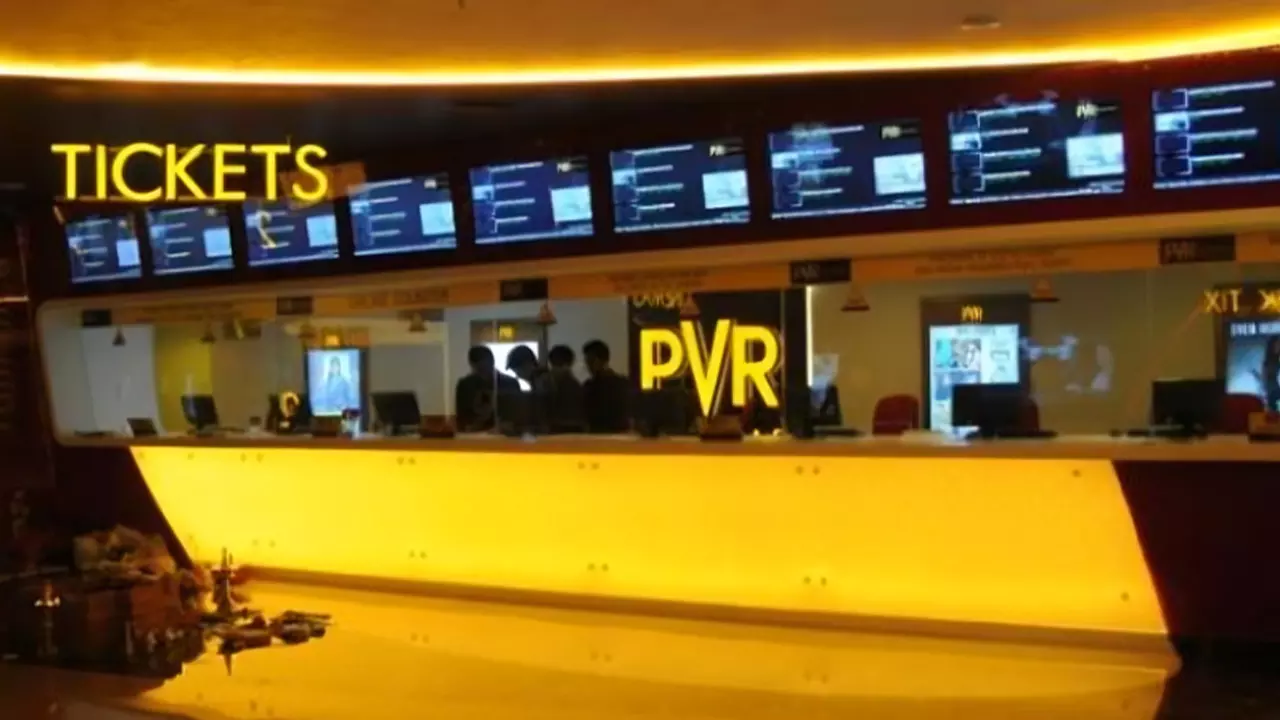
PVR INOX Directed To Pay 70,000 Compensation Over Movie Delay
By IANS On: [date], 2023 Actor Sanjay Suri on Wednesday said he is extremely thankful to his ‘Gulabo Sitabo’ co-actor and PVR chain partner, Ayushmann Khurrana for his generous contribution in his time of need.
This is a case of a complaint lodged by advocate Chanda Athish Kumar, who had booked 2 tickets of a Telugu movie Kubera. The booking of the movie was done for 20 June 2025, the time of the show being 10.35 PM, to be held at Next Galleria Mall, Moosarambagh, Hyderabad.
The complainant arrived at the theatre with his companion prior to 10:35pm. Notwithstanding this, trailers and advertisements played at the theatre after this time and the film played at 10:52pm. The complainant submitted that he suffered a great deal of inconvenience as a result of the late showing.
What Was the Reason for the Consumer Commission to Discover Service Deficiency?
The Commission, however, considered it to be more than a mere ordinary irritation or discomfort arising out of viewing advertisements at a cinema theatre. It held that by persisting with the advertisements well past the stipulated time of start, delay was caused in rendering the service to the consumer, which he had already paid for.
Section 2(11) of the Consumer Protection Act, 2019. The term “deficiency” in relation to service means any fault, imperfection, shortcoming or inadequacy in the quality, nature or manner of performance which is required to be maintained by or under any law for the time being in force or has been undertaken to be provided by a service provider.
The Commission went on to find the conduct to be an unfair trade practice. The reported order states that the theatre did not rebut evidence that commercial advertisements were being displayed after the time printed on the ticket.
The Commission therefore ordered that the PVR Cinemas and PVR INOX should pay 20,000 as the compensation amount to the complainant and 5,000 towards litigation expenses. In addition, 50,000 should be paid as a punitive amount to the District Consumer Welfare Fund, totaling 75,000 within the purview of the order. Some news articles give the amount paid directly to the complainant and punitive damages as two separate figures, hence the 70,000 figure in certain reports.
Is the Film Ticket a Contract Between the Theatre and the Customer?
2 of the most relevant issues in this case, is the show time being scheduled.
In a similar 2026 case, the District Consumer Disputes Redressal Commission, Medak, in Telangana has ordered PVR INOX to pay Rs 2,600 towards compensation to a consumer who reached PVR’s hall at 10 pm to watch a movie only for it to start nearly 10 minutes late as commercials and trailers were screened after the time.
The Medak Commission noted that the time specified on the film ticket is contractual between the theatre and the consumer. The Commission noted that any departure from that commitment without informing beforehand or obtaining the consumer’s approval is the deficiency of service and breach of contract.
It is relevant for this reason: that the consumer who buys the cinema ticket is buying not a ticket to get into the building but an entertainment service at a particular time. That is: if the cinema advertised a start time of 10.35 p.m. the consumer would be entitled to presume that the main feature would start at or about that time, if any arrangements are plainly specified.
So the question is whether the theatre had properly stated that the advertised show time reflects a significant amount of advertisements and trailers before the main feature.
Can Cinemas Show Advertisements Before a Film?
No, there is no restriction on the other advertisement or trailer to be displayed in the Cinema hall. We are also not banning any advertising, as the multiplexes also sell advertising space.
The legal issue is, when the commercial advertisement crosses the stipulated time of the film’s run and is an alteration in the services promised by the service provider to the consumer. In the Hyderabad case, the Commission looked into the directions issued by the Ministry of Information and Broadcasting with respect to public service awareness content and how the same should be projected.
PVR INOX was said to have contended that screening of commercials, trailers and public service announcements was part of its business and it had the right to do so under Article 19(1)(g) of the Constitution.
The Commission, however, concluded that the commercial aspect of the activity meant that the theatre could not ignore the time announced for a performance to the punter. It was therefore not a question of whether the cinema could profit from advertising, but whether that activity could justify the delay in the provision of the service.
What Does Consumer Protection Law Provide?
The Consumer Protection Act, 2019 offers remedies to the consumer when the service suffers from deficiency or their interests are affected by an unfair trade practice.
Thus, a cinema ticket holder can possibly initiate a consumer dispute redressal mechanism in case a theatre does not provide the service for which he had paid on the terms represented to him.
Relief can also be fact based. Loss of time or inconvenience, the cost of prosecution or damage for wrongful loss can be granted by a consumer commission and in appropriate cases even damages for exemplary loss. As an order from Hyderabad reveals, the monetary impact can go much further than payments to a single complainant.
The Medak case further indicates that while ordering theatre to adhere to screening timings in future, the consumer commission may also direct compensation as well as litigation expenses. In Medak case, Commission ordered a compensation of 5,000 for mental agony and harassment and 3,000 for litigation expenses.
What Does This Mean for Moviegoers?
The Delhi decision does not imply that mere delay of a few minutes entitle the consumer to compensation. Consumer disputes have to be decided on the facts of each case, which encompass the show time as notified in the advertisement and show start time in reality, nature of advertisements, directions issued by the government, and evidence led by the consumer.
But from this case comes a useful legal principle for the cinema industry. A cinema could be interested in selling advertisements, but the customer is entitled to get the service as it was represented to him at the time of the contract.
The case also illustrates how a file record can be relevant to a dispute between consumers. The Hyderabad proceedings were based partly on evidence that the advertisements were being displayed after the scheduled start time, and the Commission relied on that evidence in its decision on the complaint.
Can Consumers Challenge Excessive Delays?
The consumer can initially raise the complaint about a significant postponement of a scheduled screening with the theatre and retain the ticket, booking confirmation and other evidence showing the scheduled time. If the matter proceeds to a consumer commission, evidence of the actual start time may be relevant.
Another way in which the National Consumer Helpline can assist is by registering grievances of consumers even before they approach consumer litigation. The Indian Express had reported the National Consumer Helpline number as 1915 in connection with the cinema advertising disputes similar to those above.
The Hyderabad judgment, preceded by an earlier Medak decision, suggests that the consumer law may extend to the ordinary experience of a cinema hall visit. The key takeaway here is that, commercial advertising is not always a valid excuse for putting the service off for longer than it was to the consumer.
For multiplexes, then, the issue is not merely the quantity of advertisements. What matters is whether the manner and timing of those advertisements is compatible with the service that the ticket-holder was led to expect and with the responsibilities placed upon the service provider by consumer prote.