CJP’s Abhijeet Dipke Protest Against CEC Gyanesh Kumar, A Legal Perspective on Protest and Police Limits
The police party and Cockroach Janta Party (CJP) chief Abhijeet Dipke’s proposed protest on October 2 against CEC Gyanesh Kumar has rekindled a decade-old constitutional debate – how much room for a State to control a public protest before its repression amounts to the curbing of the right to protest?
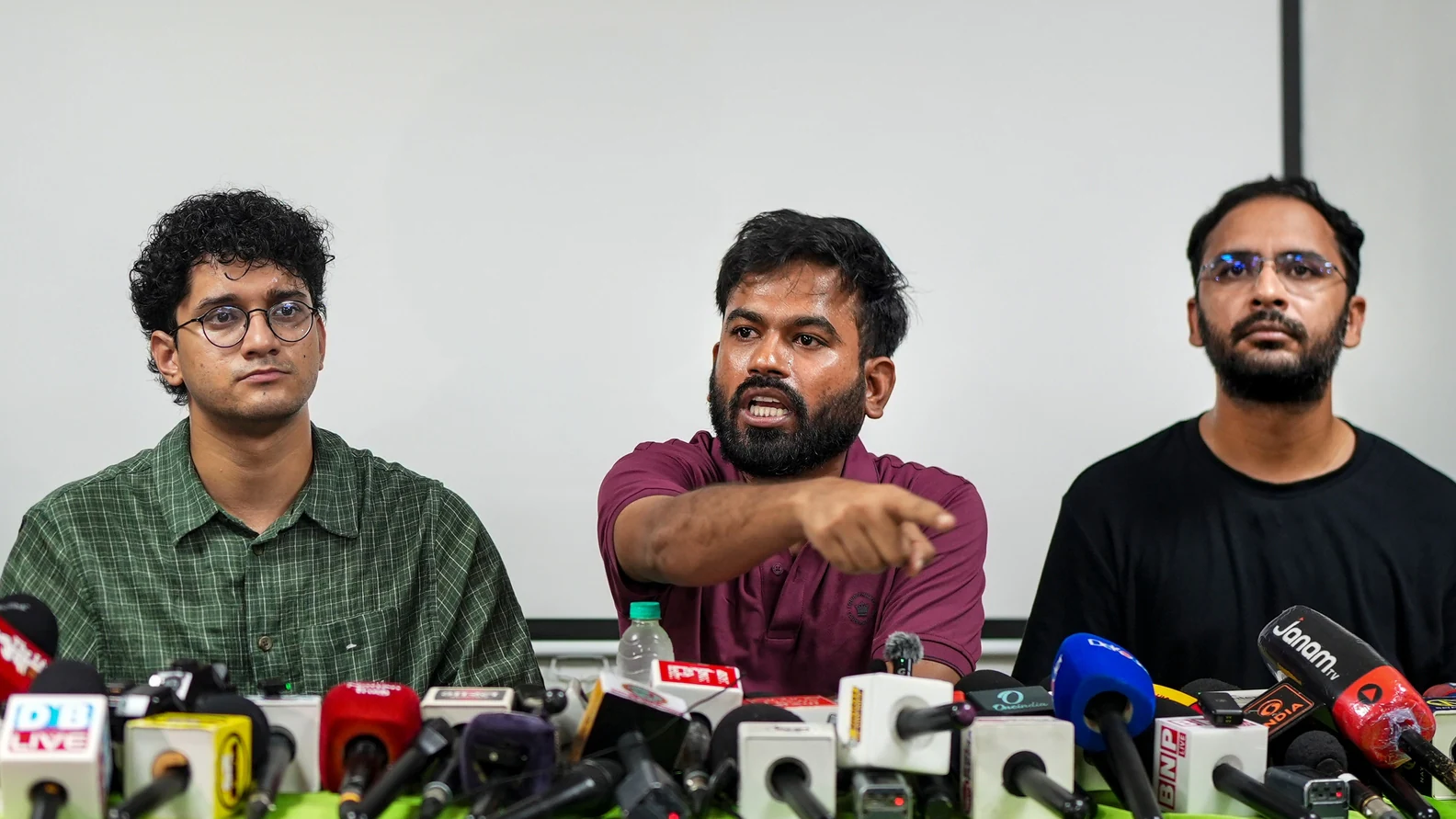
The CJP announced to organise its protest at Shivaji Park in Mumbai on 2 October for the resignation of the chief election commissioner, Gyanesh Kumar and voiced issues with the Election Commission and special intensive revision (SIR) of voter list.
The permission was turned down by the Mumbai Police for the gathering. The police referred the Shivaji Park ban, the lack of the civic permission, the silence-zone tag for the area and problems related to traffic jam and hospital access.
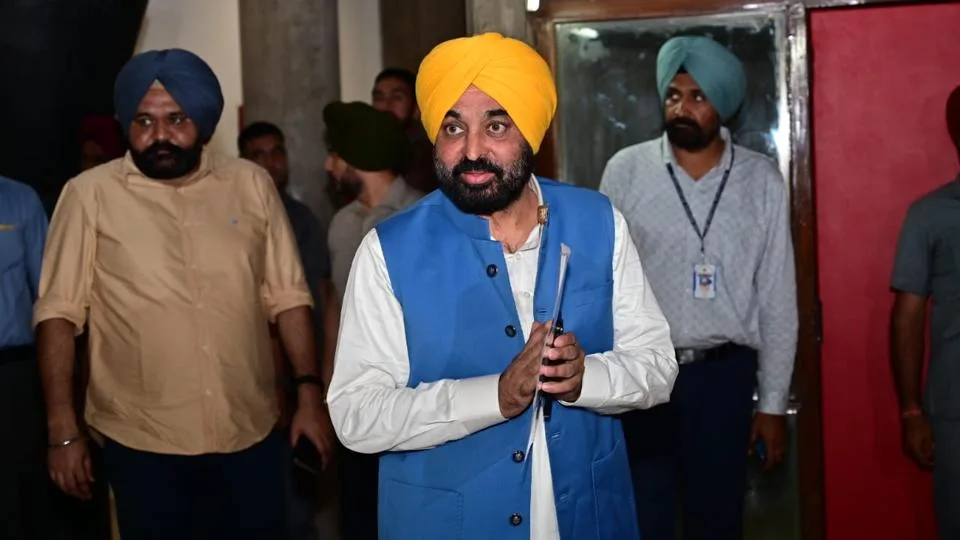
Abhijeet Dipke, a CJP founder, dismissed the order and informed the “Jail Bharo Andolan”. He said the right to protest is enshrined in the democratic principles and citizens should not be scared to voice their opinions.
But the law is more murky than the commentators have been letting on.
What Happened Between CJP And Mumbai Police?
The CJP had announced that if Kumar does not step down, the entire country would observe a protest starting from Mumbai on October 2.
The organisation sought police sanction for the protest to take place at the Shivaji Park.
“As per police communication, the department lacked the authority to allow a congregation at the ground under a previous order issued by the Bombay High Court and subsequent guidelines issued by the Maharashtra government on the use of Shivaji Park,” it said.
The police further clarified that the organisers did not have the required Brihanmumbai Municipal Corporation permission for the ground.
The officials also cited the locality’s residential nature and silence zone limitations. A huge rally might generate noise pollution and end up creating traffic gridlock and might even have an impact on the flow of ambulance vehicles accessing hospitals in the locality. The police asked the organisers to look for another venue and file another petition.
This last point is legally important.
The police, at least in the communication disclosed, did not state that CJP would not be allowed to protest anywhere in Mumbai. They did say that Shivaji Park cannot be used for this purpose and other place could be found.
Is Protest A Human Right?
Yes, but the constitutional position needs to be described.
However, it does not use the term “right to protest” as a separate fundamental right.
The right is derived mainly from Article 19(1)(a), which covers “Freedom of speech and expression” and Article 19(1)(b), which is about “Freedom of assemble peacefully without arms”.
So, peaceful political demonstrations, meetings, slogans and such will be protected by the constitution.
But Article 19 itself contains restrictions.
Articles 19(2) and 19(3) of the Indian constitution allow restrictions on speech and peaceful assembly respectively, to make them reasonable and limited. Article 19(2) states that freedom of speech may be subject to “reasonable restrictions in the interests of the sovereignty and integrity of India…public order”.
The outcome is that the right in question is neither inviolable nor slack.
The State can impose restrictions on the time, place and manner of a protest, but such restrictions must be justifiable in a free and democratic society.
What Was The Decision Of Supreme Court In Himat Lal?
An important decision on this subject is Himat Lal K. Shah v. Commissioner of Police, the Supreme Court, 1973.
This case was about rules limiting street gatherings and require on-spot authorisation.
The Supreme Court affirmed the constitutional value of peaceful gatherings and further agreed that public authorities have the right to control the use of public open spaces.
The essential difference was that between reasonable regulation and caprice and exclusion.
The Court did recognise that regulation might involve provision about permission and the mode of operation of public meetings.
However, the authority to regulate may not simply become the authority to arbitrarily exclude the populace from enjoying the rights of the Constitution.
This is directly applicable to CJP controversy.
The legal question is therefore not simply:
“Did the police deny permission?”
The more important question is:
“Was the denial of the right of Shivaji Park to be used in a lawful and reasonable manner or was it being used as an instrument to prevent the organisation from performing its right to protest?”
What about The Mazdoor Kisan Shakti Sangathan case?
The Supreme Court considered the matter extensively in Mazdoor Kisan Shakti Sangathan v. Union of India (2018).
The case was about restrictions on protests in central Delhi, including the areas around Parliament.
The Court accepted that demonstrations can lead to hardship for residents and commuters. However, the Court also declined to accept that the way to deal with public hardship must necessarily be a blanket ban on demonstrations.
The Court noted that a trade-off must be made.
This will require protests’ rights to be balanced with those of residents and commuters, shops and others impacted by a demonstration.
The judgment is significant because it refused to adopt the approach in which a blanket ban would be the default. Instead, it called for regulation and a means by which demonstrations could happen with the least interference with the rest of us.
If Permission to Protest Is Given By the Police, Does It Not Make It A Fundamental Right?
No.
The device of permission does not alone destroy the basic right.
Himat Lal was therefore in favour of Supreme Court also that authorities may impose regulatory requirements including prior permission where necessary.
But knowledge cannot be given arbitrarily.
If the authorities design a regime where permission is legally required but where in practice it is never granted, then the regulatory regime may be open to constitutional criticism.
This distinction proved crucial in the Mazdoor Kisan Shakti Sangathan matter, when the Court was testing the real-world impact of repeated curfew extensions on public protests.
Hence, CJP could not have used the argument that since protest is a constitutional right permission from police could not have been relevant.
Simultaneously, the police may not go on to say: “Permission was refused, so bye-bye to the constitutional right.”
Both propositions would be incomplete.
If There Is a Protest Can It Be Closed Because Of Traffic?
Yes, potentially.
Public order involves conveniences associated with massive assemblies.
Traffic, emergency vehicles, pedestrians and local residents will be impacted by protests attended by hundreds, or thousands of people.
Restrictions could be put in place if the police can identify a real, legally relevant public-order issue.
But the restriction must have a rational connection with the problem the restriction alleviates.
For instance, if the problem to be addressed is traffic, the person in authority might alter the route, set a cap on the number of participants, determine the duration, construct barricades or relocate the protest.
Prohibition against absolute may necessitate more compelling justification than a regulation to mitigate the effect of the demonstration.
That fits the balancing approach adopted by the Supreme Court.
What Does The Shaheen Bagh Judgment Say?
Another key ruling is the Supreme Court’s 2020 decision in Amit Sahni vs. Commissioner of Police.
The Court acknowledged that there is a right to peaceful protest.
Yet, it also concluded that on public roads and in public spaces, there can be no these things throughout the passage of time without creating inconvenience for others.