High court

Andhra Pradesh High Court Warns Magistrates Against Mechanical Remands for Social Media Posts

The present article discusses an order by the Andhra Pradesh High Court regarding arrest and remand in relations to the social media. It brings to light the fact that the court put a stress on sticking to

[Arnesh Kumar and Imran Pratap Gadhi judgments, to guard against the possible abuse of the criminal law and also safeguarding the freedom of expression by committing the courage to question any police action in a court of law.]

CRIMINAL LAW

Jurisdiction of Courts for Specific Offences under Bharatiya Nagarik Suraksha Sanhita, 2023

The Bharatiya Nagarik Suraksha Sanhita, 2023 (BNSS), which replaces the Criminal Procedure Code of 1973, clearly outlines the jurisdiction of courts for various offenses, ensuring that legal processes are well-defined. Sections 187-189 specify both territorial and hierarchical jurisdiction, determining where cases are tried based on the location of the offense or its seriousness. For example, Sessions Courts are designated to handle serious crimes (Sections 225-237), while Magistrates deal with less severe offenses (Sections 190-199). Additionally, special provisions like Section 198 address offenses related to marriage, customizing jurisdiction according to the nature of the crime. This organized framework aims to improve judicial efficiency and clarity, contributing to the modernization of India’s criminal justice system.

CRIMINAL LAW

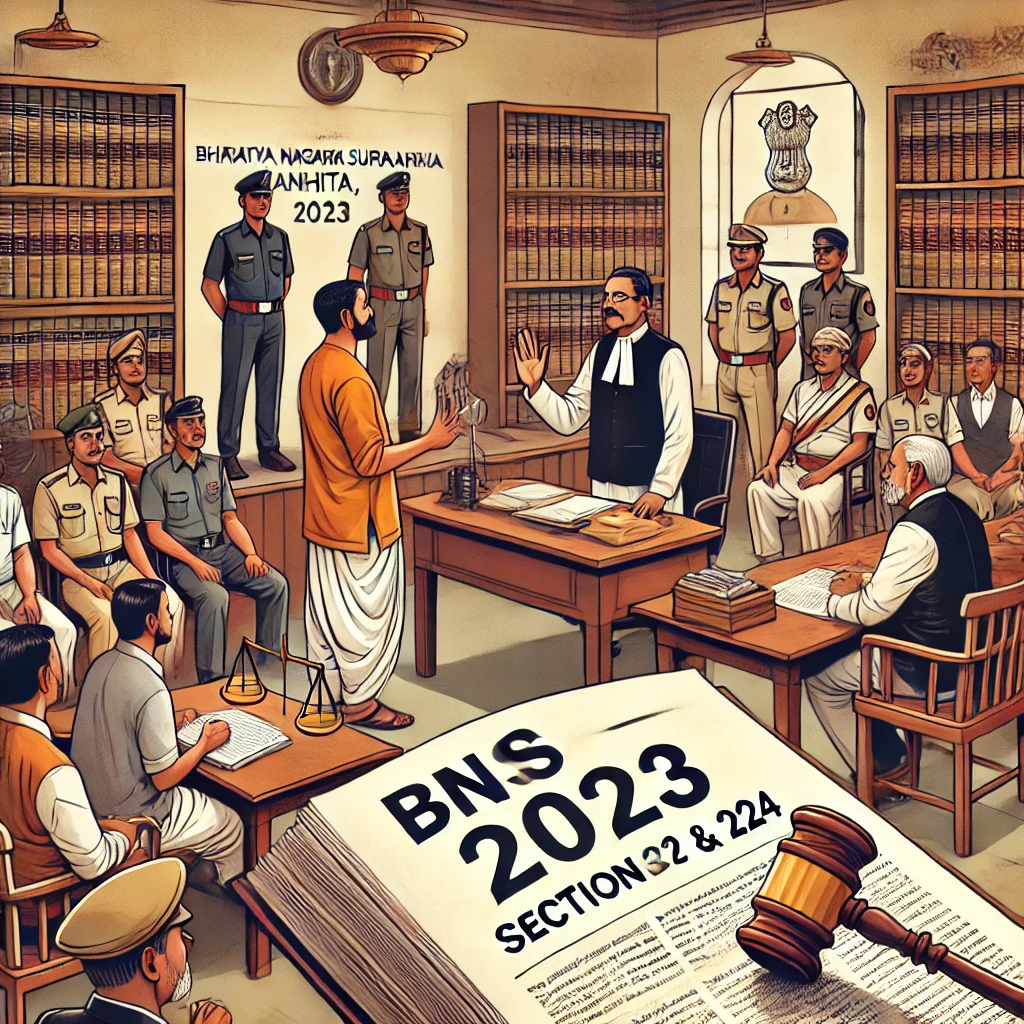
Complaints to Magistrates: Understanding Bharatiya Nagarik Suraksha Sanhita, 2023 (Sections 223 & 224)

This handbook discusses the process of making complaints to magistrates under Sections 223 and 224 of the Bharatiya Nagarik Suraksha Sanhita (BNSS), 2023, replacing the Criminal Procedure Code, 1973. Section 223 specifies the process for filing complaints with an eye towards ease of accessibility for complaining parties, and Section 224 grants magistrates authority to inquire into complaints and file proceedings. The provisions make Indian criminal justice administration efficient by providing easy redressal of grievances. The review emphasizes procedural nuances, magistrate discretion, and how they ensure the maintenance of justice, providing information on this legalized mechanism in modern times.