Current Legal Update

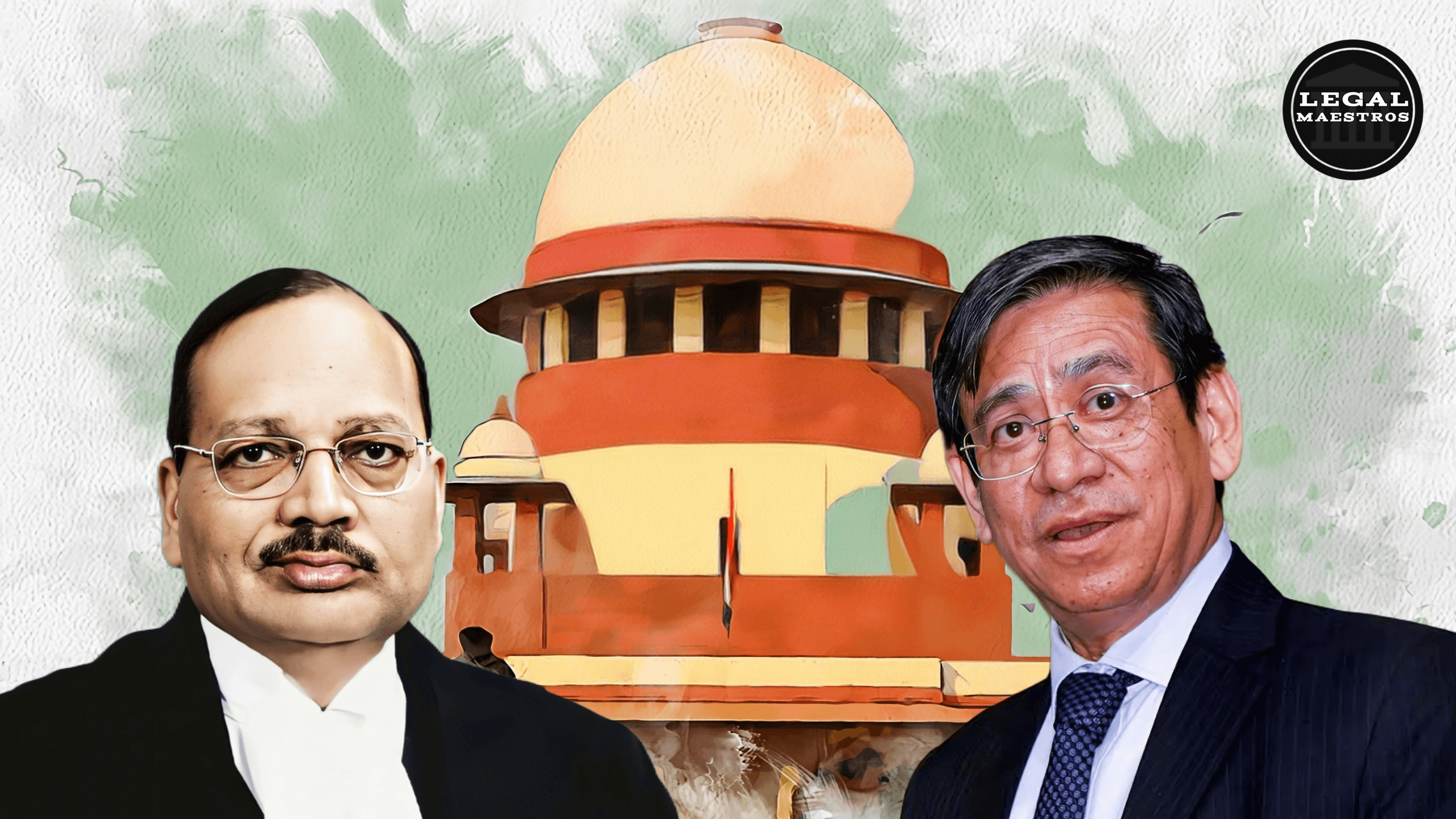
Citizenship Denied: Supreme Court’s Verdict on Rofiqul Hoque and the Burden of Proof under the Foreigners Act

The Supreme Court’s verdict on Rofiqul Hoque’s citizenship case clarifies the burden of proof under Section 9 of the Foreigners Act, 1946. The Court ruled that authorities cannot arbitrarily label individuals as foreigners without primary evidence, emphasizing natural justice and the principle of audi alteram partem. Hoque, initially declared a foreigner by Assam’s Foreigners Tribunal due to documentary discrepancies, had his citizenship restored. The decision critiques random suspicions and reinforces procedural fairness, impacting citizenship disputes amid Assam’s NRC exercise. It alleviates concerns over minor errors in documentation.

Current Legal Update

Flood Damage Under Consumer Law: A Supreme Court Clarification

This paper examines a recent U.S. Supreme Court ruling clarifying consumer rights in flood damage cases under consumer law. The decision addresses liability for property damage caused by state actions, emphasizing the Fifth Amendment’s Takings Clause and state law remedies. It enables affected consumers, like Texas landowners, to seek compensation for flood-related losses due to government infrastructure projects. The ruling highlights the balance between public projects and private property rights, offering a framework for future litigation. It underscores the importance of clear legal pathways for consumers seeking redress.

Current Legal Update

Supreme Court Upholds Conviction in Acid Attack Case, Reduces Sentence of Aged Accused on Health Grounds

The case started with a horrific acid attack on a Mathural, Uttar Pradesh, woman on June 8, 2014. Three accused—Hakim (accused number one), Umesh (accused number two), and Gyani (accused number three)—intercepted the victim returning home from a temple visit near a railway crossing. Driven by retribution over an earlier grievance, the three carried out a premeditated attack. Umesh threw acid on the victim while Hakim and Gyani held her, resulting in extreme damage including 90% loss of eyesight in one eye and permanent facial disfiguredness.

Current Legal Update

Justice B.R. Gavai’s Landmark Ruling on Equal Pension Rights for High Court Judges

The idea of equality in pensionary benefits for retired High Court judges was reiterated by the Supreme Court of India in a historic ruling that was originally penned by Chief Justice B.R. Gavai. This principle applies to retired judges regardless of their service background. When it comes to concerns concerning pensions, gratuities, and other terminal benefits, the Supreme Court ruled that all judges, regardless of whether they were promoted from the Bar or the District Judiciary, must be treated in the same manner. In addressing problems pertaining to discrimination, service breaks, and the applicability of the New Pension Scheme, the Court placed particular emphasis on the constitutional duty of equality that is found in Articles 14 and 16. By making this decision, the independence of the judiciary is strengthened, and the dignity of constitutional office is maintained.

Current Legal Update

How CLAT UG 2025’s Flawed Logical Reasoning Section Sparked Nationwide Petitions

As soon as the CLAT results were announced, students discovered that several Logical Reasoning questions were flawed. The ambiguity of certain puzzles and the lack of clear premises led many to believe their scores were unfairly affected. Within hours, petitions began pouring into high courts in Delhi, Mumbai, Chennai, and other cities. Candidates demanded the removal of disputed questions, correction of answer keys, and reissuance of merit lists. The urgency of admission deadlines heightened the pressure on courts to act quickly. This immediate legal response underscored the high stakes of the exam and the depth of nationwide frustration.

Current Legal Update

Urgent Need for Codified Tort Laws in India: Addressing Gaps in Medical Negligence and Civil Wrongs   

Although there are statutes, rules, and court rulings in India, the laws that govern civil wrongs and medical negligence are still dispersed throughout the country. Because of this fragmented approach, victims who are looking for justice, healthcare providers who are dealing with legal uncertainty, and courts that are addressing a variety of claims are all left with a sense of perplexity. There is an immediate requirement to codify tort law in India, which would involve bringing all concepts under the purview of a single, organized statute. To define rights, duties, and remedies for medical negligence and other civil wrongs, codification would streamline litigation and increase accountability. Codification would also streamline the process of litigation. The purpose of this article is to investigate the historical backdrop of Indian tort law, to identify important gaps in medical negligence claims, to investigate the benefits and problems of codification, and to provide ideas for the development of an efficient Tort Code that is suitable to India’s legal and social situation

Current Legal Update

Judicial Restraint in the Spotlight: CJI B.R. Gavai Explains Why Judges Avoid Public Platforms

In this article, Chief Justice of India B.R. Gavai discusses his thoughts on the reasons why judges have generally refrained from communicating with the public on public venues. Specifically, it investigates the origins of judicial restraint in the context of maintaining impartiality, the difficulties that are presented by live streaming and social media, and the possibility that statements could be taken out of context. Gavai places a strong emphasis on the necessity for judges to maintain a proper distance while remaining acutely aware of the realities of society. Also discussed in this post is the necessity of striking a balance between the integrity of judicial decision-making and the implementation of technological and transparency efforts. In conclusion, it examines the changing nature of judicial behavior in the future, taking into account the advent of instant communication and the extensive monitoring of the public.

Current Legal Update

Byju’s Financial Crisis Unveiled: Understanding the Complex Web of Lawsuits and Bankruptcy Filings  

Byju’s, which was formerly considered the most prestigious company in India’s educational technology sector, is currently in the epicenter of a widespread financial catastrophe. It was a default on a term loan that was worth $1.2 billion that sparked this problem, which ultimately resulted in a Chapter 11 bankruptcy in the United States. Following the discovery of a missing $533 million, a flurry of lawsuits were filed in the bankruptcy courts of the United States, alleging that the company’s founders and affiliates had concealed assets. Additionally, regulatory investigations and internal instability have been taking place in India at the same time that insolvency processes and legal challenges have been taking place. The current turbulence that Byju is experiencing is defined by the complex legal battles, regulatory interventions, and operational challenges that are discussed in this article. Additionally, the article explores what the future holds for the troubled company.

Current Legal Update

Justice B.R. Gavai: Tracing the Journey of India’s 52nd Chief Justice from Amravati to the Supreme Court  

Justice Bhushan Ramkrishna Gavai, who was born on November 24, 1960 in Amravati, Maharashtra, ascended from humble beginnings to become India’s 52nd Chief Justice of the Supreme Court on May 14, 2025. He was born in Amravati. After graduating from Amravati University with a degree in commerce and law, he started his own practice in 1985 and has steadily climbed through the ranks, holding positions such as standing counsel, additional public prosecutor, and High Court judge. In 2019, he was appointed to the Supreme Court, and since then, he has written hundreds of judgments in a wide range of subjects, including constitutional issues, criminal law, and environmental protection. He is the first Buddhist and the second Dalit to hold the position of Chief Justice, and his tenure as Chief Justice, which has lasted for six months, is a historic first. The author of this article discusses his biography, professional accomplishments, judicial philosophy, and the lasting impact he had on the legal landscape of India.