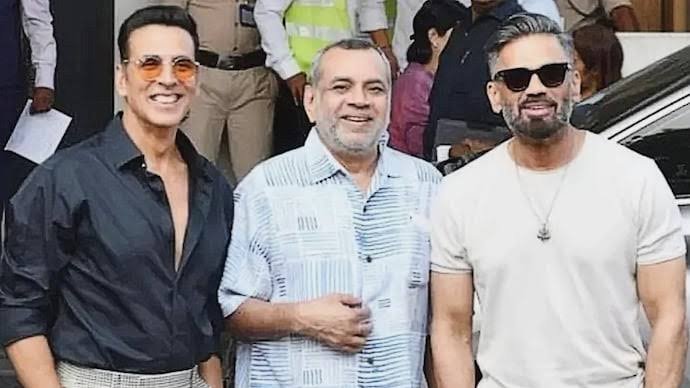
Akshay Kumar, Paresh Rawal and Suniel Shetty are currently set to return. However, the franchise’s intellectual property rights seem to be the reason behind the delay in the third instalment of the Hera Pheri franchise. On 14 October 2026, director Priyadarshan said that he does not know if Hera Pheri 3 will ever be made as the film has “so many complications” but has reiterated that he is not involved in the project anymore.
The issue also gives rise to a broader legal question under Indian copyright law, namely who has the right to make a sequel to an existing film? The answer may touch upon multiple rights, including rights in the original cinematograph film, rights in the underlying story and screenplay, use of characters, music rights, and contractual rights granted to producers.
The dispute also illustrates that it is often difficult to know exactly who owns a film franchise, or indeed who owns the rights at all, simply by knowing who the original producer was or who the production company is that is planning the next sequel. The agreements and chain of title need to be looked into.
Why Is Hera Pheri 3 Facing a Legal Dispute?
Hera Pheri (original) was a remake of the Malayalam movie Ramji Rao Speaking that was released in 1989. The Hindi film was a hit comic film that starred the casts of Akshay Kumar, Suniel Shetty and Paresh Rawal. The third installment has been in talks for more than a decade with the previous film Phir Hera Pheri coming out in 2006.
The present dispute centres around conflicting claims over rights in the franchise. Seven Arts International, the company linked with producer G.P. Vijayakumar, has insisted that it bought rights derived from the original Malayalam film and opposed the right to produce sequels for the Hindi franchise. The company argues that the licences obtained for the Hindi adaptation did not cover sequels or prequels or an unrestricted exploitation of the original characters.
Producer Firoz Nadiadwala and Akshay Kumar’s production house Cape of Good Films have adopted a different stance on the third instalment rights. Cape of Good Films has stated its rights on Hera Pheri 3. The conflict between the rights has added to the legal tussle over the film. Read about the rights conflict and the judgement in Madras High Court on Cinema Express.
Need Help With Your PhD or LLM Thesis?
Explore our thesis and dissertation writing support services for PhD and LLM students. Get subject-specific academic assistance for your research project.
Explore Our Services →The extent of the rights of each of the parties will ultimately be determined by the contracts, assignments, licences and judgments that may be obtained. A claim by a producer or production company is not a conclusive statement of ownership.
What Does the Copyright Act Say About Film Sequel Rights?
The Copyright Act 1957 is the main piece of legislation which determines, among other things, who has ownership and control of the copyright in a film and the works that it is based on.
The rights for all different kinds of copyrighted work are laid down by section 14 of the Act. There are certain rights, such as making copies of a cinematograph film, and communicating the film to the public which are exclusive rights in respect to a cinematograph film. Literary, dramatic, musical, and other works are also separately protected.
17 is mainly concerned with ownership of copyright in the first place, which is governed by statutory provisions and agreements. For a cinematograph film this is most significant for the producer, although one must also consider the ownership of underlying works and the contractual implications.
A sequel might be made by simply duplicating or disseminating material from the source movie. It might incorporate, change or add to areas of the source story, script, exchange or other – secured – content. The degree to which those components can be replicated, changed over or added to, relies on the kind of copyright concerned and on the authorizations the rights holders have given.
Therefore, the proprietor of copyright in the original film does not automatically have the right to freely use any underlying work or element without having regard to different contractual rights. On the other hand, owning a screenplay or other underlying work does not necessarily mean that the owner has a right to own the cinematograph film.
Is it possible for a Producer to Sell the Rights of a Sequel?
A producer may transfer or licence copyright in and/or other rights to the work in respect of which the producer holds or is authorised to transfer copyright or any other rights. But a transfer cannot (without prior authorisation) give rights greater than those of the transferor.
Section 18 of the Copyright Act addresses the assignment of copyright, with Section 19 providing for the requirements in respect of an assignment. An assignment of copyright must be in writing and signed by the person assigning the copyright or his/her duly authorised agent. It must identify the work and the rights assigned, as well as the duration and territory of the assignment.
Whether required in a dispute could go to whether the agreement was of a sequel or just a remake (or indeed not a sequel at all). Words of the agreement could show that a producer needed fresh permission to make the next instalment or not.
A right to produce one Hindi version of an adaptation does not imply a right to produce multiple sequels. Conversely, a broad general assignment may carry more extensive rights. Again, the scope depends on the terms of the assignment and applicable law.
Where a matter like Hera Pheri 3 is concerned, courts may have to look at the original rights document, the ‘chain of assignment’, the nature of any licences and whether previous transfers have gone beyond the rights held by the transferor.
Do Film Characters and Music Have Separate Legal Protection?
Yes, the film franchise may have multiple levels of IP, and someone owning one layer does not guarantee ownership of every other layer.
The story, screenplay or dialogue will need to be sufficiently original, set out in writing and could qualify as a literary or dramatic work for copyright protection. The use of a copyright work in a sequel might potentially constitute a reproduction or adaptation. The scope of legal protection that can be claimed for a particular character is also a matter of how that character is (or was) used. There is no hard and fast rule that all fictional characters are copyright- owned separately from the film.
Music raises its own set of issues. Music copyright may be present in the music itself (musical works and lyrics), the sound recording, or both, and there may be differences in who owns the copyright and who licenses it from work to work. A production company might have the right to produce a film, but have to clear certain songs, or other copyrighted material.
It is for this reason why arguments over film franchises get a little more complex. One claimant may have the rights to the cinematograph film but there may be another problem, such as in the story, music or contractual permissions. You will have to consider each claim in relation to the work involved and the agreements.
How does the conflict affect Akshay Kumar, Paresh Rawal, and Suniel Shetty?
The rights question was also separate from the performances of the players and any contractual obligations. Being in an earlier film does not automatically make an actor the owner of the copyright of the film or confer a right to make a sequel and use the franchise.
Actors may have contractual rights such as rights to receive payment, rights to appear, credits or other terms. Such rights depend on the particular actor’s deal. The right to make and distribute the sequel, however, usually can only be made if the intellectual property rights and production arrangements are in place.