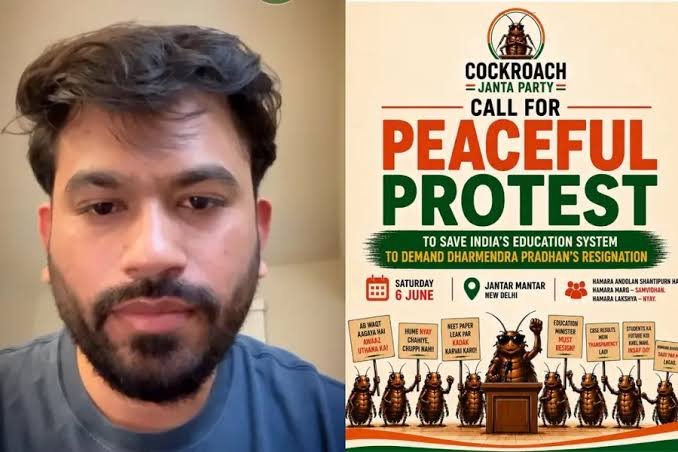
The Delhi Police objected to the proposed assembly and issued prohibitive orders. The issue is whether the actions were proportional to the identified threat, and whether less drastic options were possible. This requires investigation of the actual orders, the record of the reasons for the orders and the context of the planned protest. The detention of the organisers does not, in isolation, make the protest itself unlawful.
What Has the Supreme Court Said About Protest Restrictions?
Issue in Mazdoor Kisan Shakti Sangathan v. Union of India (2018) the Court deliberated on the right to gather at public places to protest and on the limitations imposed on demonstrations at Jantar Mantar in New Delhi. While upholding the right to protest as one of the fundamental rights, the Court admitted the residents’ and masses’ rights.
The judgment stressed the importance of balancing the balancing of interests and that neither the right to protest nor public order was an absolute. Authorities may impose limitations on the timing, location and way of a peaceful protest; however, such limitations must be evaluated in the light of the constitution. “Temporary regulation” is entirely distinct from an open-ended or de facto ban.
That argument applies to the CJP controversy because a protest can be ‘disruptive’ in that sense of the term: it can draw notice, impact traffic, and challenge political figures while not crossing the line to become illegal. The limitations on restrictions need to target actual concerns about public order, rather than becoming a catch-all justification to prevent political criticism. Section 163 of the BNSS (now being substituted for Section 144 of the previous Code of Criminal Procedure) must also be employed within those limits.
Was the Detention of Abhijeet Dipke Legally Justified?
It is alleged that the BNSS officers under Sections 126 and 170 of the BNSS put Dipke, Das and Ranka under preventive detention. While section 126 relates to protection of peace, section 170 allows detention before commission of cognisable offences when a police officer has reason to believe it cannot be prevented in any other way.
The leaders were taken before an Executive Magistrate and, after executing personal bonds, released the following day. According to the leaders’ lawyer, the police had not provided the necessary material to justify their continued detention. The alleged release should not be viewed as a final judicial finding that every facet of the police conduct was unlawful, but it does underscore the need for legal basis and due process when preventive action is taken.
Whether a detention is lawful must be determined on the basis of the statutory conditions, the material available to the authorities and the prescribed procedures. Further safeguards are found in Article 22, although what those are will vary according to the nature and legal basis of the measure. A preventive measure cannot be used simply to punish a person for organising a protest or for political dissent.
Can a Provocative Political Message Be Banned Because It Offends People?
A symbolically provocative protest can flout social mores or employ language that some in the public find offensive. It is well settled in Indian constitutional law that merely because speech offends does not provide grounds for curbing political expression. The question is whether the expression falls within the existing constitutionally permissible grounds for restriction and if the state response is proportionate.
This does not mean however there is a difference between the purpose of a political symbol and actions of a person which breaks the law on their own. Peaceful satirical slogans and evidence of symbols are likely to be protected constitutionally while violence, real threats, illegal blockage or any other illicit activity can have a legal punishment based on the circumstances. Officials should look at the actions not just a provocative name.
CJP episode, then, prompts larger considerations about the nexus between political speech and public order. Although Indian law allows public authorities to regulate protests in prescribed circumstances, it also preserves people’s right to hold their leaders to account. Whether a restriction can be said to be valid hinges not on the closeness of the protest to the norm, but on legality, proof and moderation.