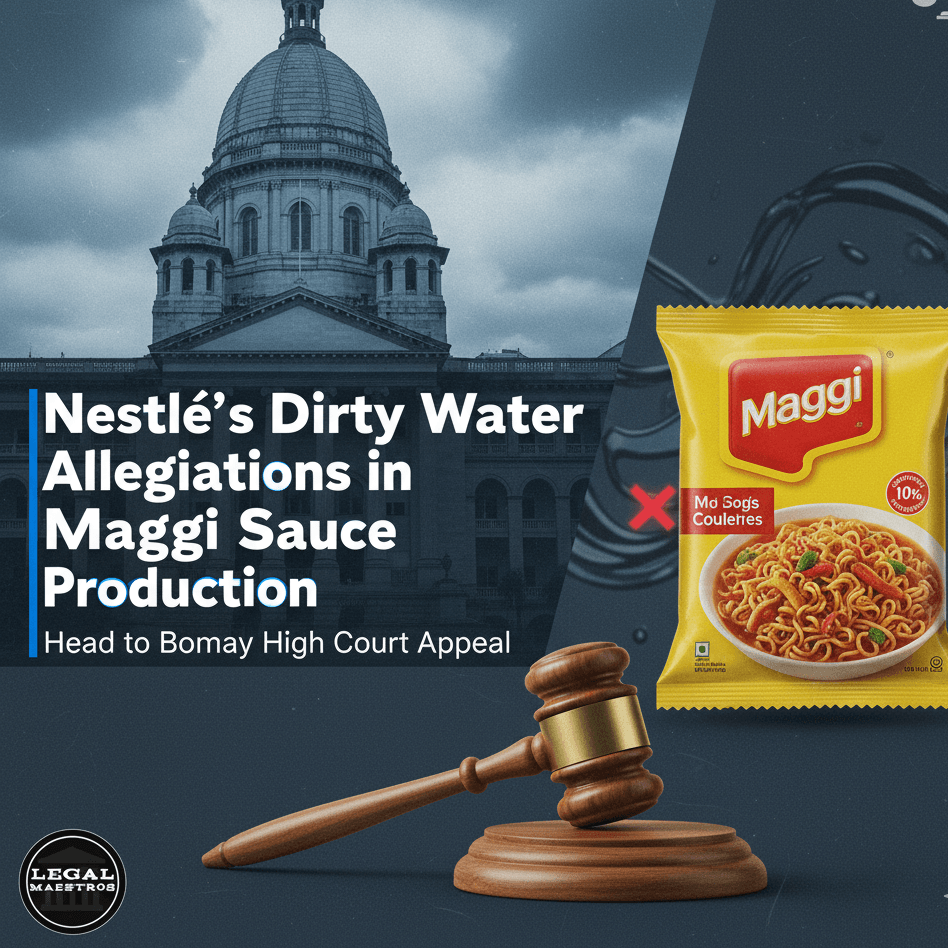
Nestlé's Dirty Water Allegations in Maggi Sauce Production Head to Bombay High Court Appeal
How the Allegations Began
It became controversial when a local food safety agency sounded an alarm over the quality of water at one of the Nestle production plants. The move was caused by regular inspections in a plant making Maggi sauces and ketchups. In these inspections, the authorities took a water sample of the water used in the production line to the laboratory to determine whether it was within the rigid requirements of the Food Safety and Standards Authority of India (FSSAI).
The laboratory findings were worrying since it meant that the water did not comply with the necessary safety and purity standards to be used in food products. The results indicated that there were contaminants that rendered the water unfit to contain a product that can be consumed by a large number of people. After this report, the regulatory body made an order against Nestle, which must have contained the penalties and the instructions to correct the issue right away in order to prevent any possible health hazards.
This first order was a big setback to Nestle, a firm that lays stress on its quest on global quality standards. The charges directly challenged the safety of its production process of one of its brand lines which is a household name in India. The results implied that there was a grave negligence in the quality control department leaving the company in a situation where it either had to comply or take the accusations to the court.
For any queries or to publish an article or post or advertisement on our platform, do call at +91 6377460764 or email us at contact@legalmaestros.com.
Nestlé’s Strong Denial and Legal Fight
Nestle India, in its turn, responded with a powerful defense, flatly refusing to admit any concession to quality standards. As the company claimed, it has never ignored strict internal practices and all the relevant food safety regulations in order to guarantee purity of its ingredients. It demanded that all water discharged to its factories should be thoroughly purified and tested on a regular basis to determine that the water is absolutely safe to be used in food production.
Being not willing to submit to the decision of the lower authority, Nestle decided to appeal the conclusions to the court. The case by the company is that the decisions made by the food safety officials were wrong. Its legal approach would aim at challenging the foundation of the order, which may concern the way of how the water samples were collected, the process applied to the lab tests or the way the officials interpreted the findings.

Nestle has demonstrated its determination to challenge the claims in a higher court by submitting the case to the Bombay High court. It is not only to reverse the particular order and fines but also to safeguard the image of its Maggi brand. Nestle believes that the results of the regulator are an exception rather than the reality behind its production process, which it currently hopes the high court will uphold.
The High-Stakes Court Battle
The case is now at a very critical level at the Bombay High Court. The legal team of Nestle is claiming to get the order of the lower authority thrown out. Their argument largely focuses on discrediting the evidence which is used to punish the company. This entails a thorough technical and legal audit of the report by the food safety officials with the view of establishing any discrepancies or lapses in the processes which might render the results irrelevant.
In the defence, Nestle will likely give its evidence before the court. This would involve its long history of internal quality control records as well as the test results of recognized accredited laboratories that analyzed water in the same facility. The goal of the company is to demonstrate the stable track record of adhering to the FSSAI regulations and to demonstrate that water used in production of its Maggi sauces had been safe and clean.
This legal battle places the judiciary in a very decisive situation because it has to weigh the evidences presented by a multinational company against the conclusion of a public health administrator. Implications of the ruling in the court will be significant. In case the court finds the case in favor of Nestle, the company would have been cleared in this case. Nevertheless, in case the court will support the order of the regulator, it would prove the worries regarding water quality and possibly, bring the penalties even harsher.
Memories of Past Troubles and Consumer Worry
This new scandal about the quality of water necessarily reminds people of the significant crisis Nestle experienced in 2015. Its flagship product at the time, Maggi noodles, was prohibited in a number of months in India because of claims that the product had high quantities of lead. The incident in that episode badly hurt the brand image, caused massive losses and had to go to an enormous extent in winning back the consumer confidence.
The present accusations, despite referring to another product, utilizes the familiar social anxiety surrounding food safety and the reliability of the large brands. The new problem might provoke new concerns about the safety of all Maggi products among the consumers who recall the noodle scare of 2015. It demonstrates how fragile consumer confidence is and how unstable it can be due to the recurrent quality-based scandals regardless of what the court verdict may be.
Thus, the case in the Bombay High Court is not just a legal wrangle concerning a single regulatory order. It is a life and death situation with the Maggi brand as it is back under the microscope. Consumers, competitors and regulators are closely following the proceedings because the result will significantly affect the perception of people towards Nestle and its commitment to food safety in India.